Japan Trip Post-Mortem (New Years 2022)
Last updated: 2026-08-07
This is a summary of my New Years trip to Japan after Christmas of 2022. It was my first solo trip and my first trip at the tail-end of the COVID period. I’m quite fond of this first trip; it was the first time I ever traveled solo and I was still in the tourist mindset, so I was still trying to maximise every waking hour of my trip.
I originally wrote this a week after I came back in my Obsidian note-taker, but for an internet release, I’ve went through and updated the article, accounting for a more experienced perspective after many, many further trips to Japan for concerts, other live events and tourism. I will try to make it clear what are my “new” perspectives as we go along.
I had also incidentally been laid off from work (“restructing”, or so they said), so I had no work worries.
Day 0 (Sunday)
My flight was out of Changi Airport (IATA: SIN) at 10:20PM. I was flying Scoot Airlines, a budget low-cost carrier subsidiary of Singapore Airlines. I had an extraordinarily cheap air ticket, at around SG$400 return. This cheap price was no doubt due to travel only starting to resume at the tail-end of the COVID dark ages. I was still a no-risk taken traveler, so I reached the airport a whole three hours earlier at 7:00PM, checked in my bags and went off to have dinner and wait for my flight.
The flight was not great, to say the least. There was a kid crying for his Mum for half of the flight. Looking back, I probably should have just spent some money and bought some premium economy seats.
The flight was not great. There was a kid crying from his Mum for half of the plane ride. Looking back, I should have just spent some money and bought the premium economy seats.
Day 1 (Monday)
I reached Narita Airport (IATA: NRT) in the wee-hours of the morning, at 5:40AM. One thing I like about Scoot is that they have a tendency to arrive ahead of schedule, even to this day. Perhaps we were so early due to the lack of air traffic, both in the air and in the origin/destination airports.
The immigration lines at Narita were practically non-existent. At the time, the pre-authorisation web application VisitJapanWeb (VJW) was not well-known, so many were caught off-guard when they arrived. I had fortunately done my homework, and there were only 10 people in front of me in queue. Considering how awful immigration can be nowadays at any of the international airports in Tokyo, it’s funny to consider that there was a time when you would only see a maximum of ~50 people in line in Tokyo.
An interesting thing I noticed, was that as I walked towards the immigration counters from my gate, I counted over 20 staff holding up the same sign to arriving passengers - telling you to go prepare the VJW QR code before arriving at the immigration counters. I couldn’t help but think that all the available manpower in this airport, at that moment, was put into making sure the passengers of Flight TR808 knew to prepare their VJW QR codes. At the time, I only gave it a passing thought, chuckling at the inefficiency of having so many staff holding up the same sign. Now, I realise that it was likely because we were the only flight arriving at the time. COVID was a truly the dark ages.
I made it through immigration within 10 minutes, and then proceeded to spend another 20 minutes waiting for my bags at the carousel. Customs was fast if one had prepared VJW beforehand (and still is fast now). Everything was automated and you just needed to scan your passport. Once that is done and you pass any random inspections, you were out of the airport1.
Unfortunately, arriving so early in Narita Airport isn’t much of a boon. This is because both of the high-speed train lines (The Narita Express (N’EX) and Keisei Skyliner) have their first trains out of the airport at around 7:30AM. I’m a big fan of such express trains, and generally try to take them over other modes of transport, so I avoided taking any limousine buses or taxis and waited for my train. I visited the nearby FamilyMart convenience store (“konbini”) to have breakfast. I also settled a few errands
- Figured out how to buy a SUICA IC card from a ticketing machine
- Bought a N’EX train ticket for Tokyo
On this fine first-day of my trip, I would be meeting a friend at the coastal city of Numazu, in Shizuoka prefecture. By this time, it was around 7:30AM, roughly the time when the first express trains would be leaving from Narita Airport. A queue had started to form in front of the JR Pass booth. I did have a JR Pass for this trip (this was when a nation-wide JR Pass for 7 days was still ~30,000JPY), but I planned to only activate it a week later, so I held out on exchanging it now.
My train travel would be:
- Narita Airport Terminal 1 Station to Tokyo via the Narita Express (N’EX)
- Tokyo to Mishima via the Tokaido Shinkansen
- Mishima to Numazu via the Tokaido Line
Looking back, I wonder if I could have taken a faster train from Tokyo to Mishima station, as there is a HIKARI Shinkansen service that runs occasionally from Tokyo station that stops directly at Mishima station. I’ve taken this service occasionally but perhaps the timing did not work out this time, or it was simply faster to take the KODAMA service with how early I was arriving. Another way I could have made the trip more comfortable was to ride the Narita Express to Shinagawa station, followed by then taking the Tokaido Shinkansen to Mishima station. Shinagawa station is much more navigable than Tokyo station, in my opinion.
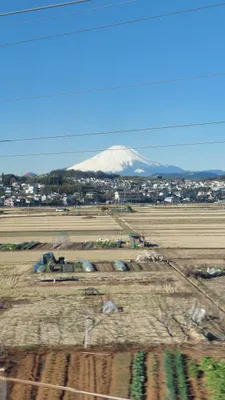
After arrival at Tokyo station, it was time to commit the ever-so common mistake when visiting Japan - missing the train you were supposed to take. In this case, it was completely my fault (or maybe 90%, idk). You know, back at Narita Airport, I decided to exchange my JR Pass later in the trip. Well, when I arrived at Tokyo station, I found that I had about 30 minutes of free time until my Shinkansen train would arrive, so what better time than to do it now?
This ended up being a mistake.
Either I was blind, or the JR EAST office was not open yet (according to Google Maps, it should’ve been), but I spent close to 20 minutes running around Tokyo station trying to find this dumb office. I ended up not finding it in the end either, making my endeavour a waste of time.
It was also at this moment, that I realised that the Shinkansen requires two tickets:
- A basic ticket that covers the distance travelled (the “basic fare”). One would also pay this if they were traveling on the normal trains, and
- An express ticket that covers the fact that you are taking a special express service, in this case, the Shinkansen.
There ended up being quite an incident here, of which my best recollections is as follows:
- When I arrived at Tokyo station via the N’EX, I was of course, still within the gantries. I had not exited yet.
- I went to and bought a Shinkansen ticket at the machine. The machine spat out a single ticket, which I believe was the basic fare ticket.
- Deciding that I should try and exchange my JR Pass now, I exited the station using my N’EX ticket. The ticketing machine ate the ticket as I exited (as expected).
- I failed to find the JR EAST counter to exchange for my JR Pass.
- I tried to enter the Shinkansen platform from the outside using the single ticket. It failed. I asked a station attendant. Me, not knowing a lick of Japanese at the time, did not know what he was trying to tell me.
- I entered the regular JR station again via the JR gantries with my Shinkansen ticket, it worked (which is why I believe it was the basic fare ticket). I tried other gantries into the Shinkansen platform from within the JR station, but it did not allow me in.
- After faffing about, I’d already missed the train I intended to take, so I decided to “screw it” and went to the Shinkansen counter.
- I showed him my ticket, and after some confusing back-and-forth due to the language barrier, he said he wanted to see where I came from. I said I came from the airport. He then asked to see my N’EX ticket. I told him that I exited the station with my N’EX ticket and the machine ate it up. He kept telling me that I should have a N’EX ticket on me, which I kept telling him that I did not have one. After asking me for the N’EX ticket multiple times, he (and I) eventually gave up and he just issued me the two tickets. Unfortunately, I had to pay full price again.
Because of this incident, for a time I had always bought Shinkansen tickets from a human at the counter to avoid this issue on subsequent trips. Nowadays, since I usually only travel on the Tokaido-Sanyo Shinkansen, I buy them from Smart’EX. If I’m travelling outside of that particular service, I either buy it from eki-net, or I would normally have a pass, such as the Hokuriku Arch Pass.
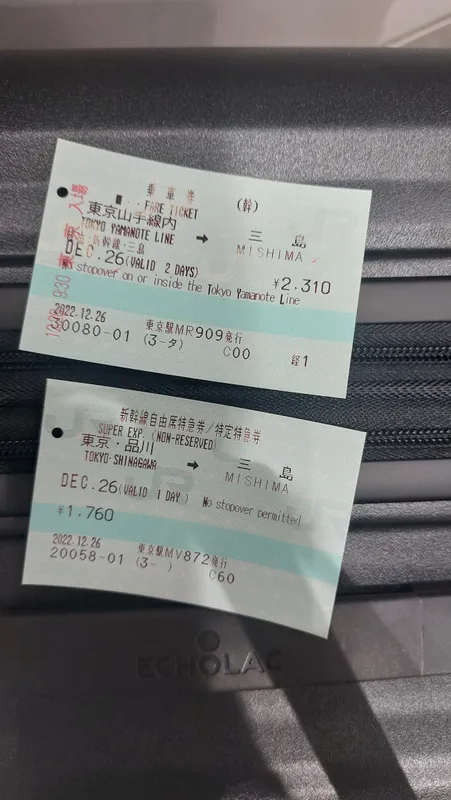
I eventually arrived at 11:00AM at Numazu station, about an hour after I was supposed to (sorry, friend). We left our luggage at our hotel, and it was then time to commence the Love Live! Sunshine!! pilgrimage i.e. seichi junrei. If you’re not familiar with the term, it’s basically revisiting the real-life places that inspired (or rather, were lifted from) the locations in the anime.
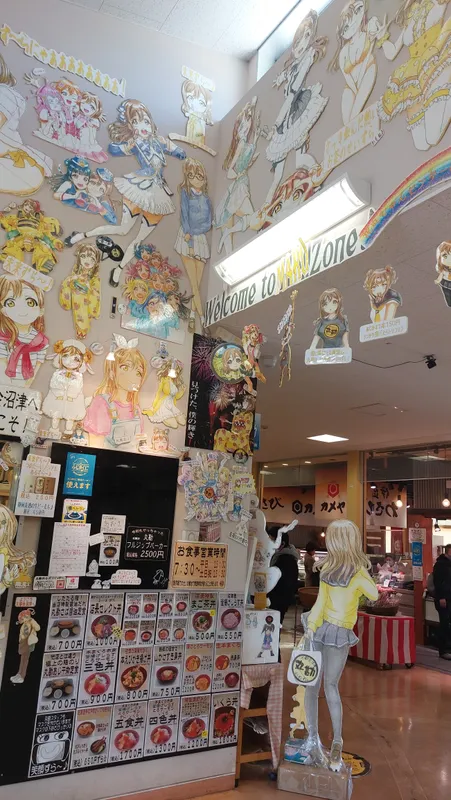
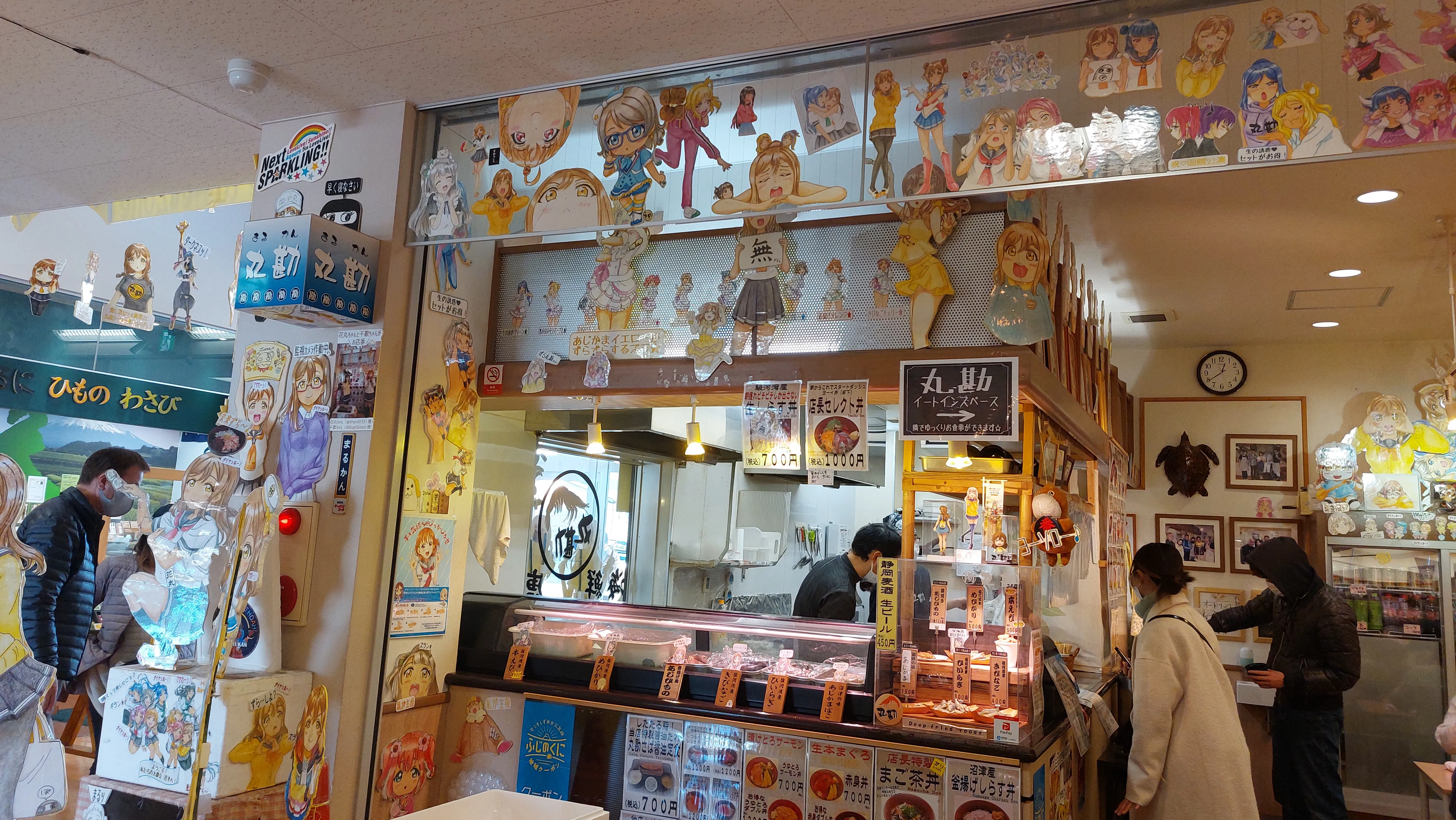
We rented a pair of e-bikes using the HELLO CYCLING app and cycled to a seafood place called Marukan at the southern part of the city, near the Numazu port. The shop was filled to the brim with Kunikida Hanamaru “pop art”. It was certainly an interesting experience for someone who has only ever seen anime through a computer screen.
Unfortunately, the staff working in this store that drew the pop art left sometime in late 2023, about a year after this trip. Many illustrations plastered around their shop went along with them. The walls of Marukan are now laid bare.
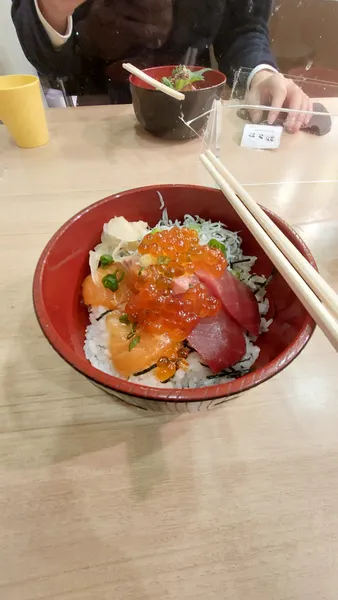
The kaisen-don I ended up eating was alright. A local specialty is shirasu i.e. any clear or white-coloured juvenile fish. I’m not sure what the shirasu was in the kaisen-don that I ate.
I used to think that what I ate that day was extremely good, perhaps because it was the first time I had eaten a sushi dish in Japan, and a sushi dishi near a port, no less. Nowadays, at the premium price of 3,000JPY, I realise that it was not that great, and quite expensive for what you get. Having visited Numazu many times since and through recommendations, I’ve discovered other shops around the port area that I prefer to dine at.
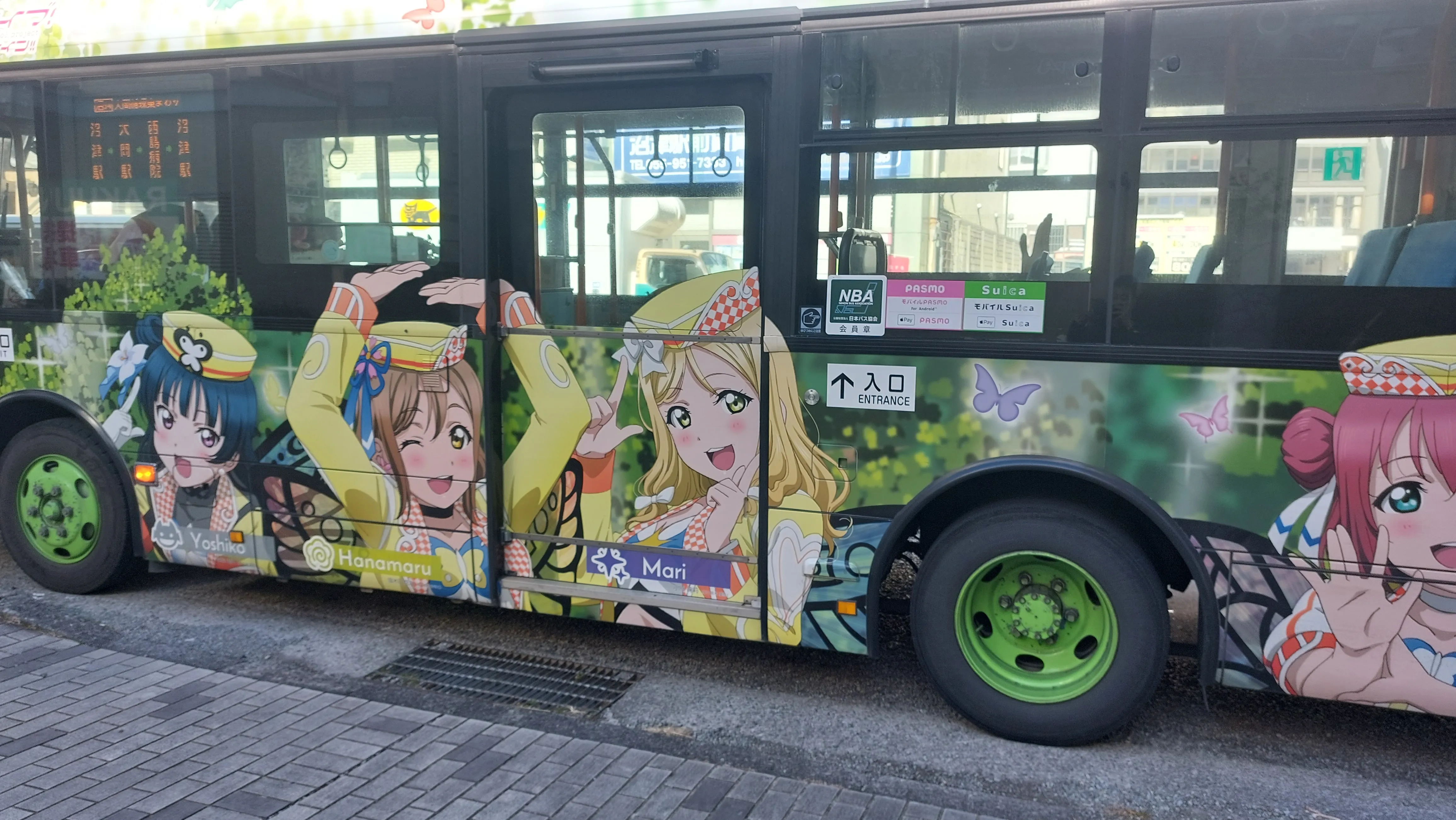
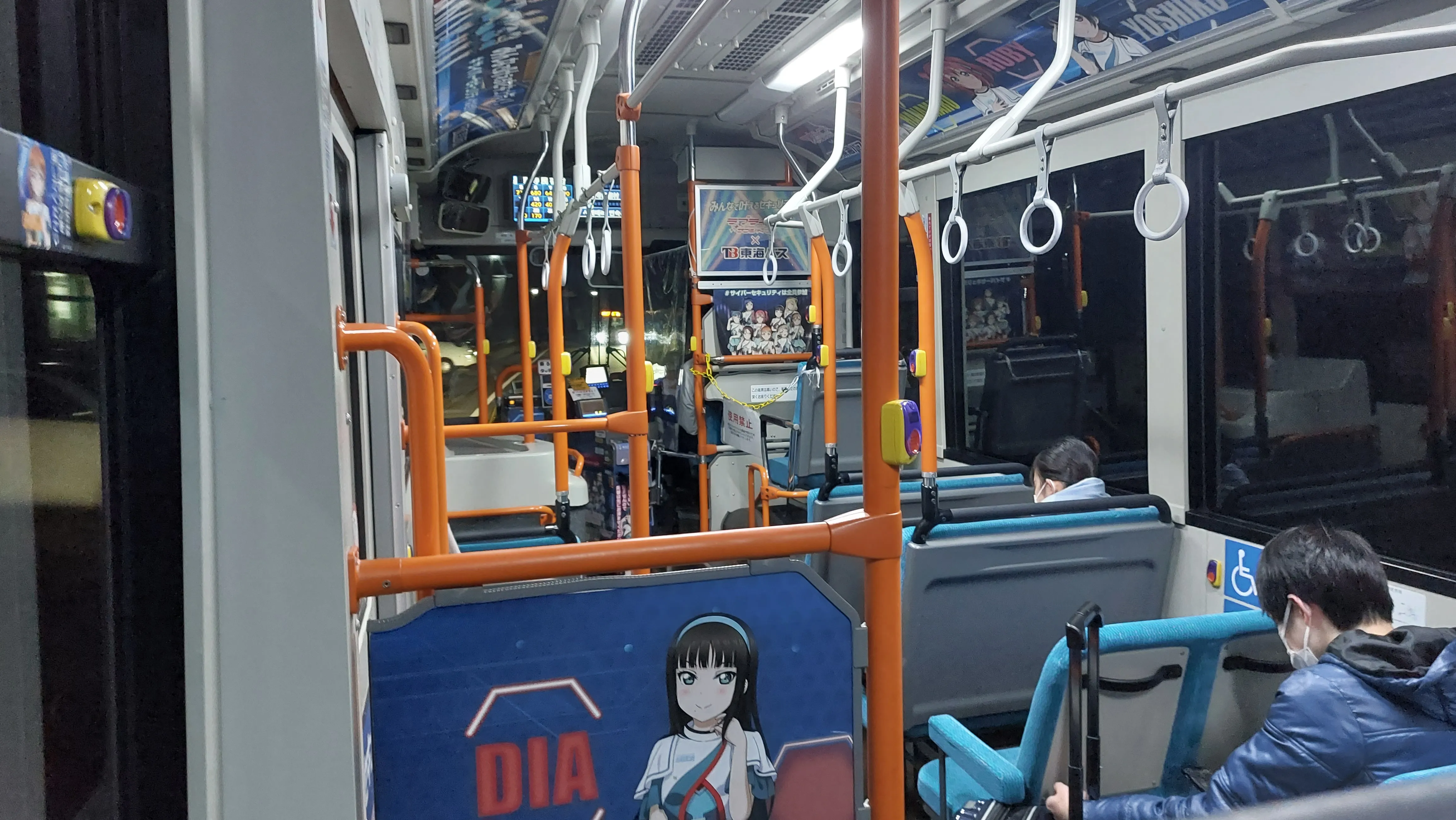
We proceeded to walk around the port. The buses in the area also featured Love Live! Sunshine!! art:
Our plan now was to bike over to Uchiura, a sleepy town about 10km south of Numazu City along the coast. It was the setting of much of the Love Live! Sunshine!! anime.
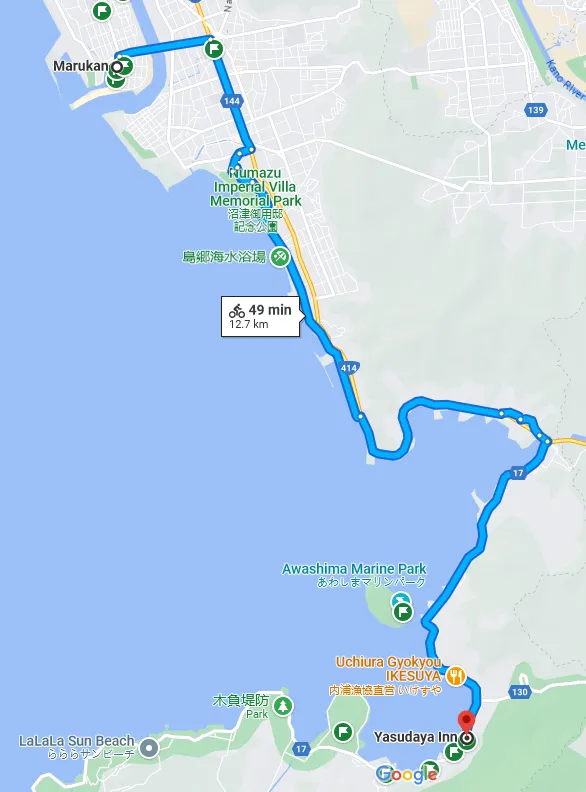
Google Maps told us that it was take about 50 minutes. With e-bikes, we predicted that it would be even shorter.
I would like to now state that I am a city boy that only learnt how to cycle when I was 18 years old. I cycle, perhaps, once every year at a park with my friends, meaning that I have no experience dealing with cycling with car traffic. The roads to Uchiura are narrow, have tunnels, little to no sidewalks, and have a surprising number of heavy vehicles (trucks, buses, etc) whizzing by. It was non-stop, I tell you. There was not a single quiet moment on that road to Uchiura, which I had not expected on a Monday afternoon. Thinking about it now, it was probably busy precisely because it was a Monday afternoon - these were work vehicles traveling between Izu and northern Shizuoka.
Every driver passing me must have been sweating bullets seeing how wobbly I was. It was also hard to appreciate any views, considering that I was trying my best to not accidentally swerve into a vehicle. It should go without saying that I do not recommend doing this if you are inexperienced at cycling like me. Take the bus instead, eat the 700JPY+ cost and walk around over there.
However, for what it’s worth, I have since met someone who did the same thing. They are much more used to riding bicycles in the city over there, and he seemed to find the bike ride much more manageable than I did.
The rest to be updated
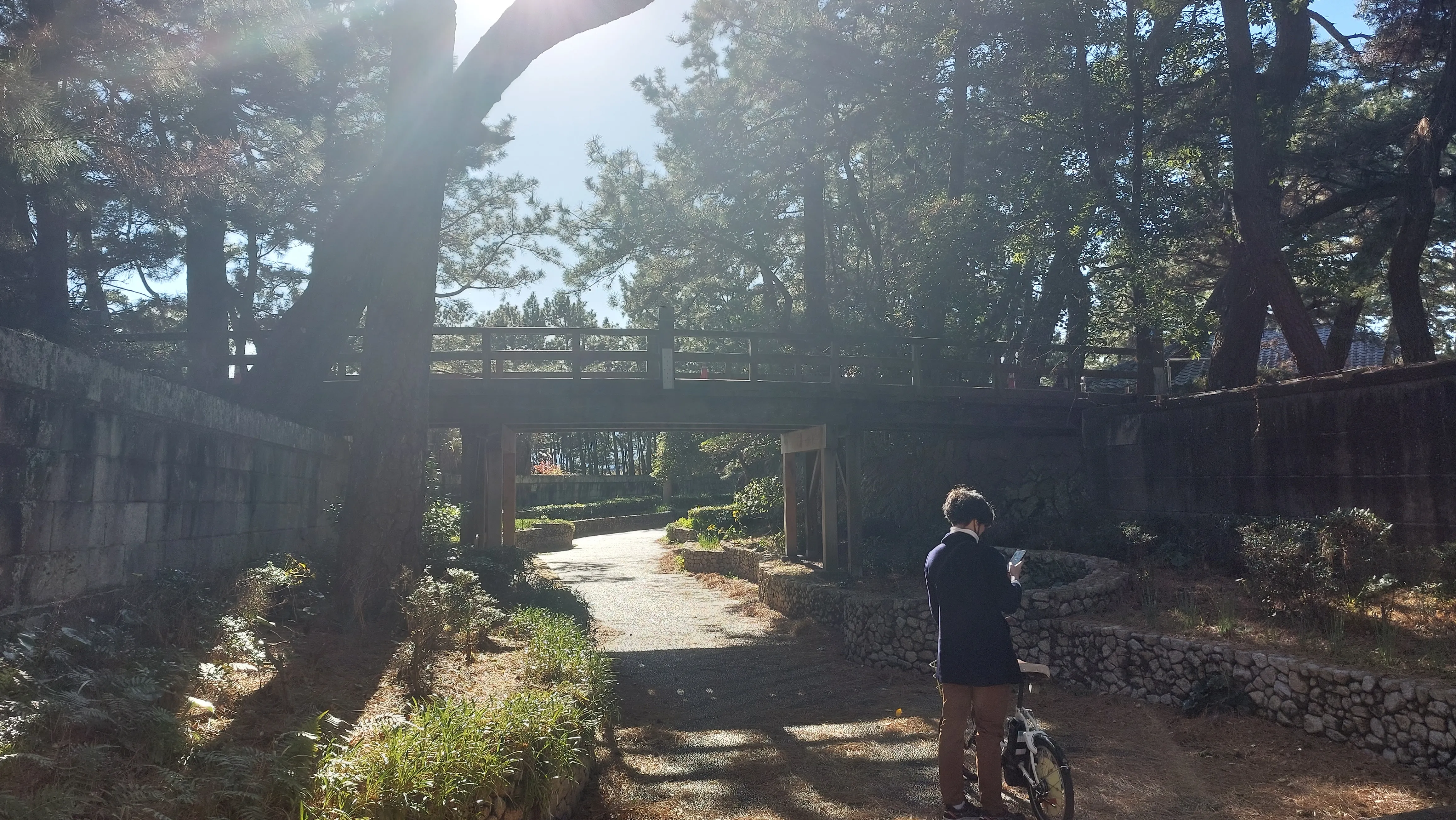
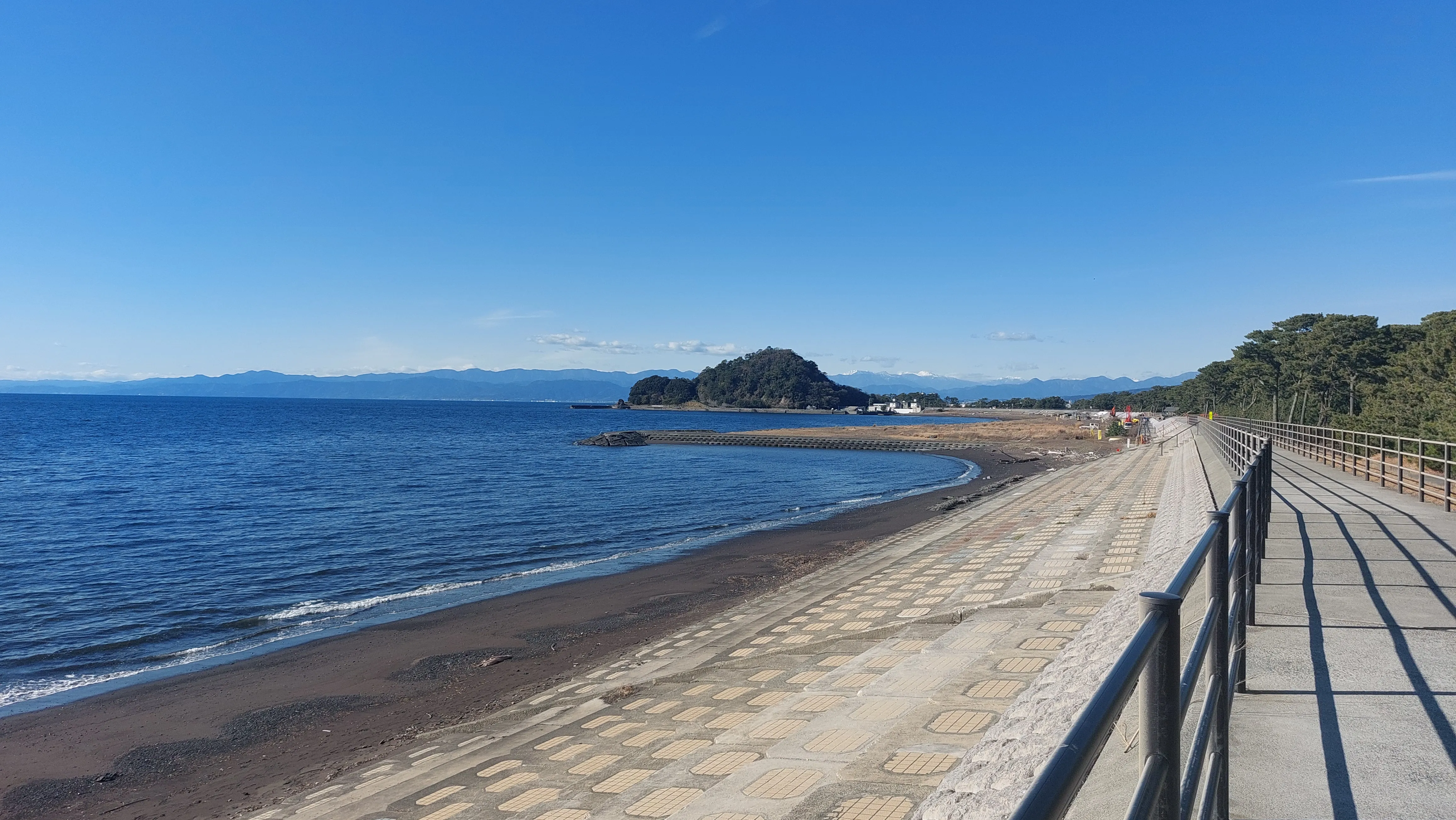
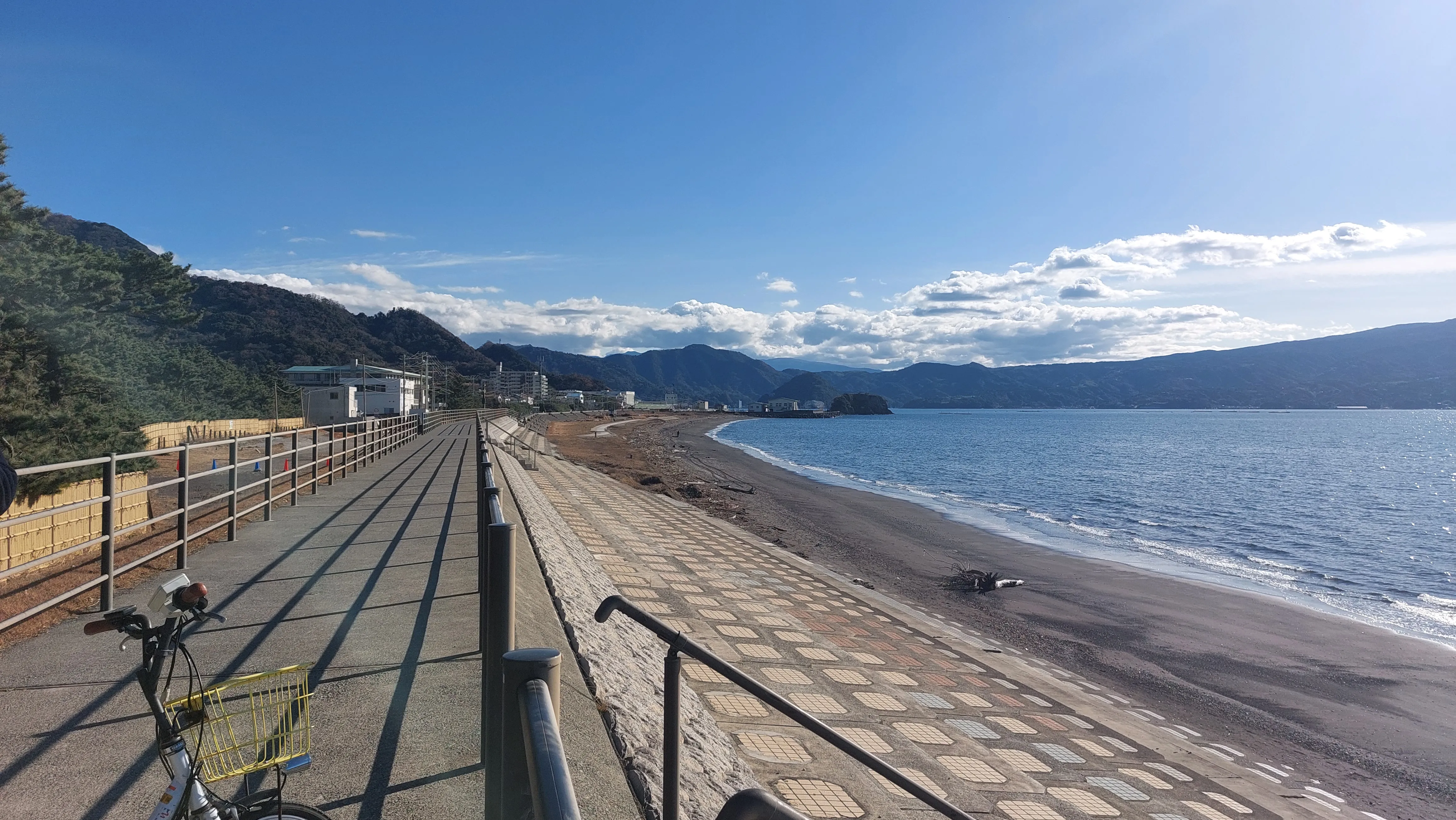
Once we got into the Uchiura region though, it does quiet down a bit, so there was more time to take in the atmosphere. Here’s a list of places that I visited:
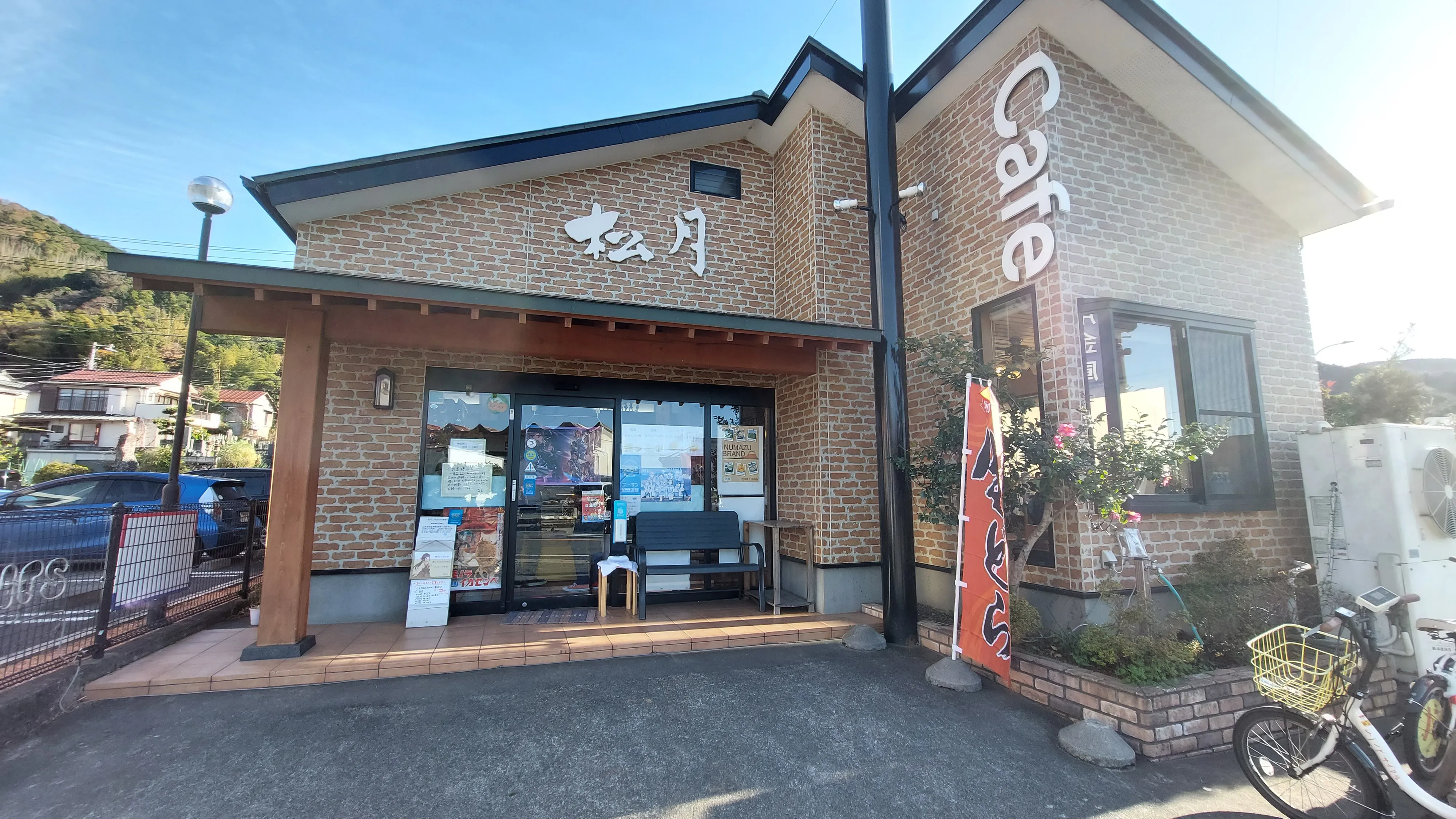
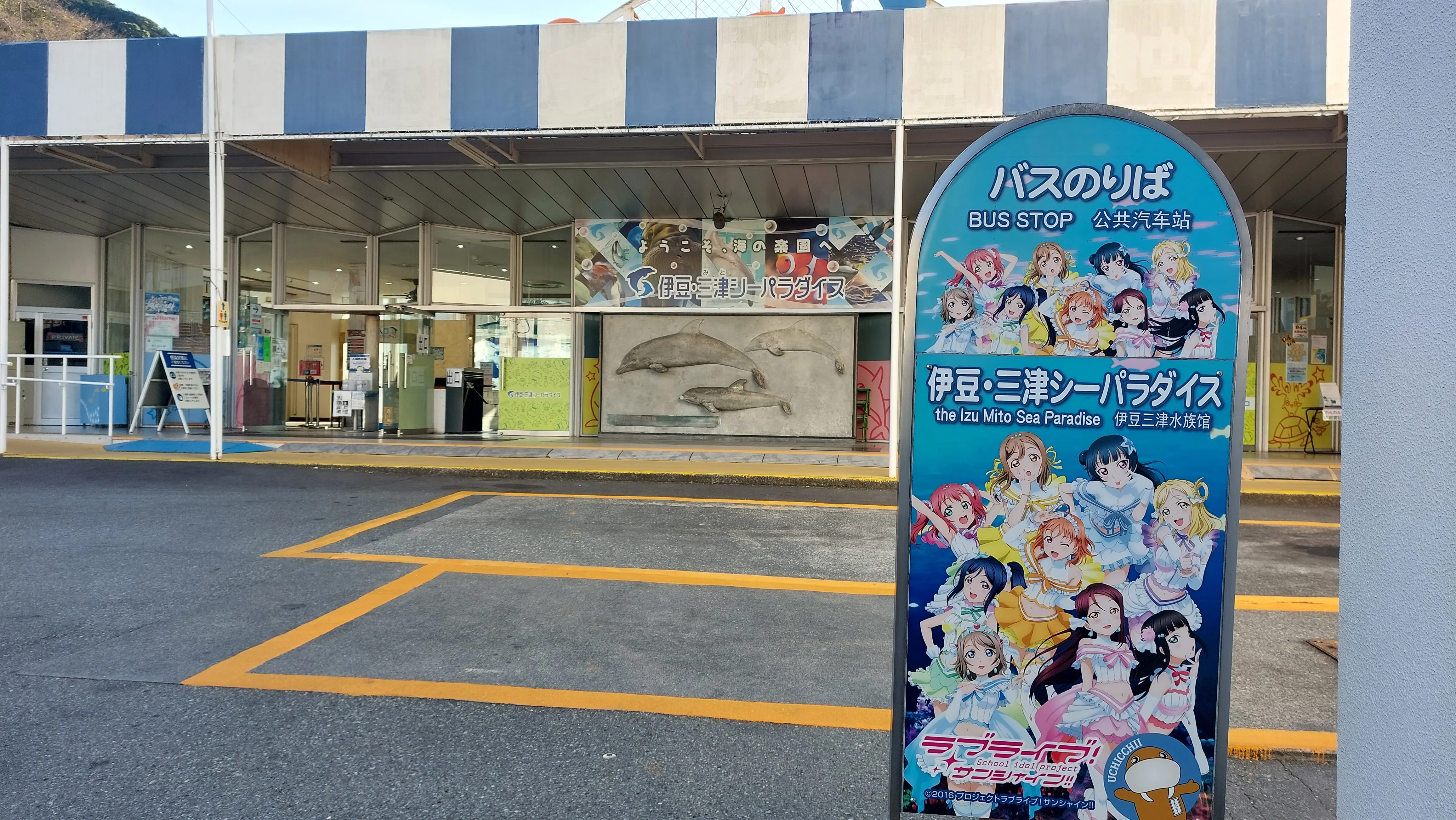
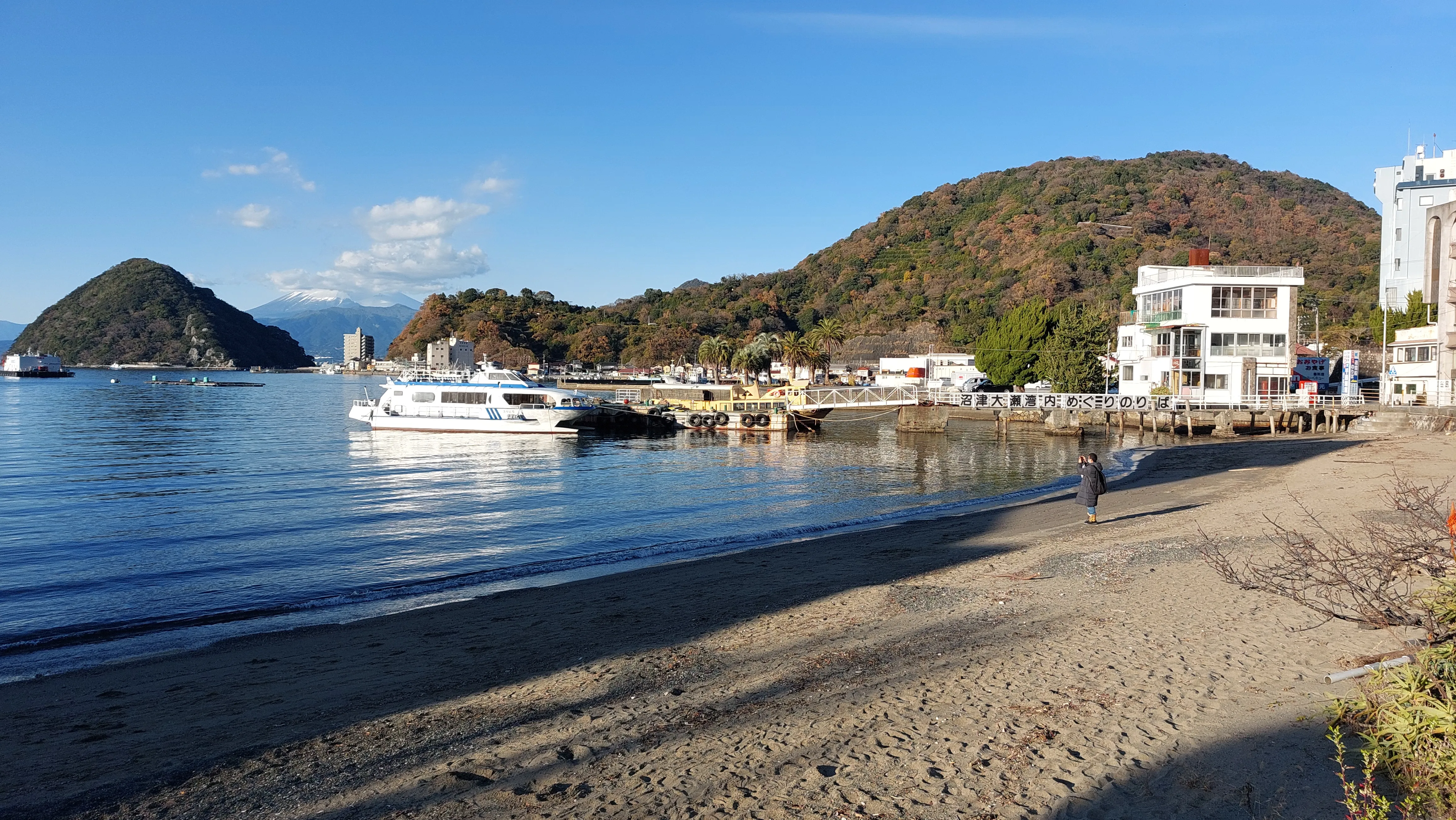
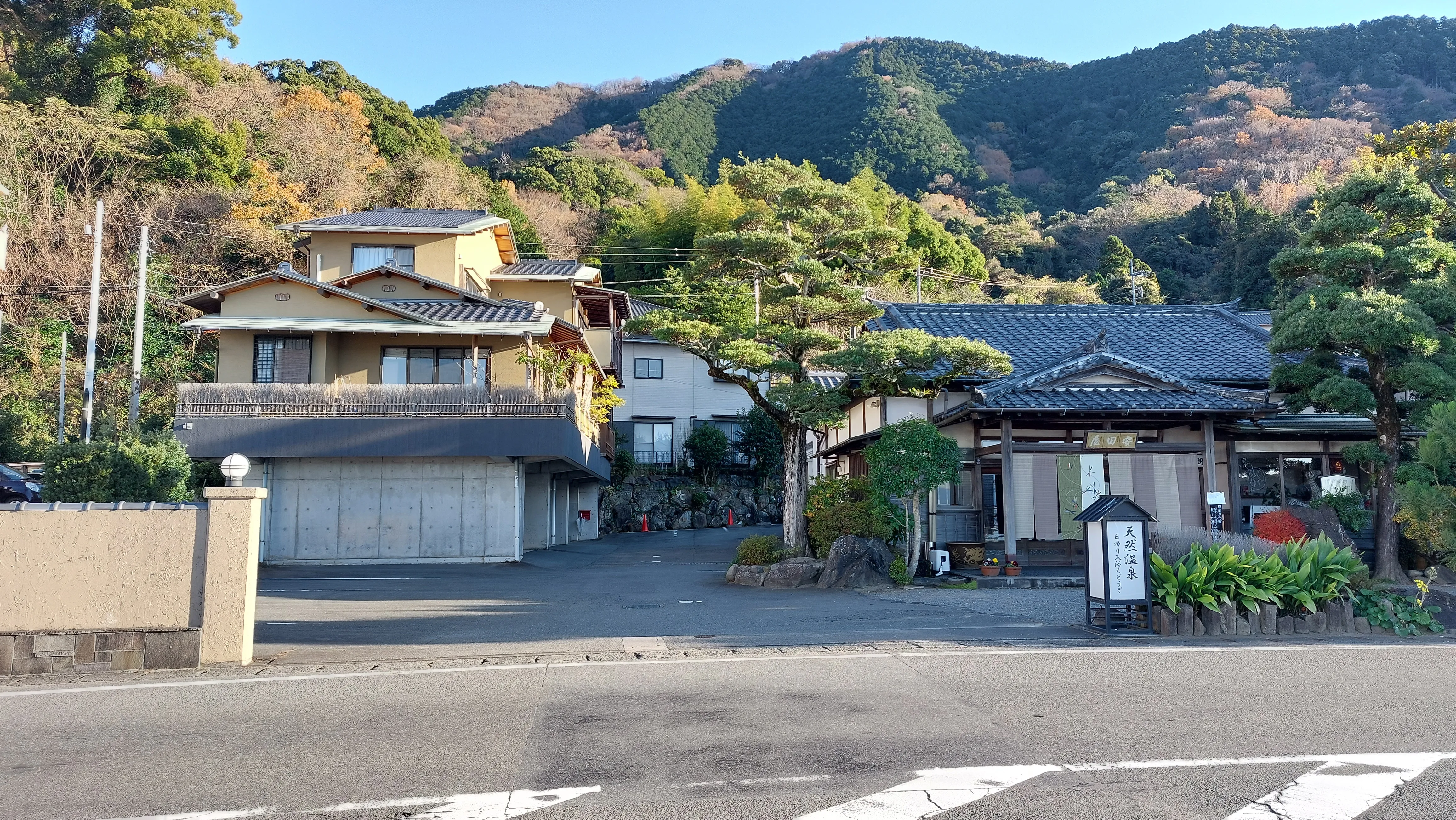
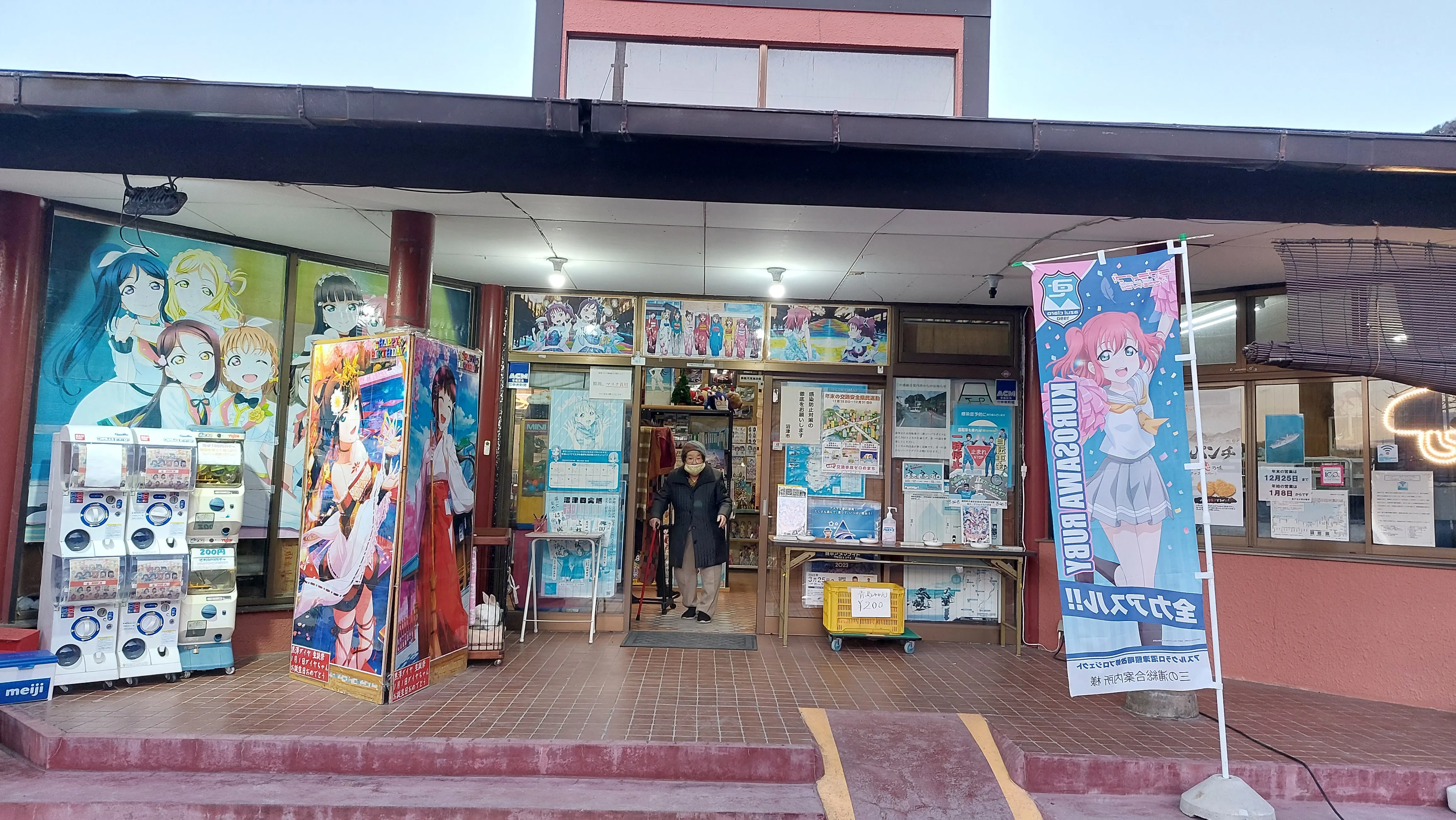
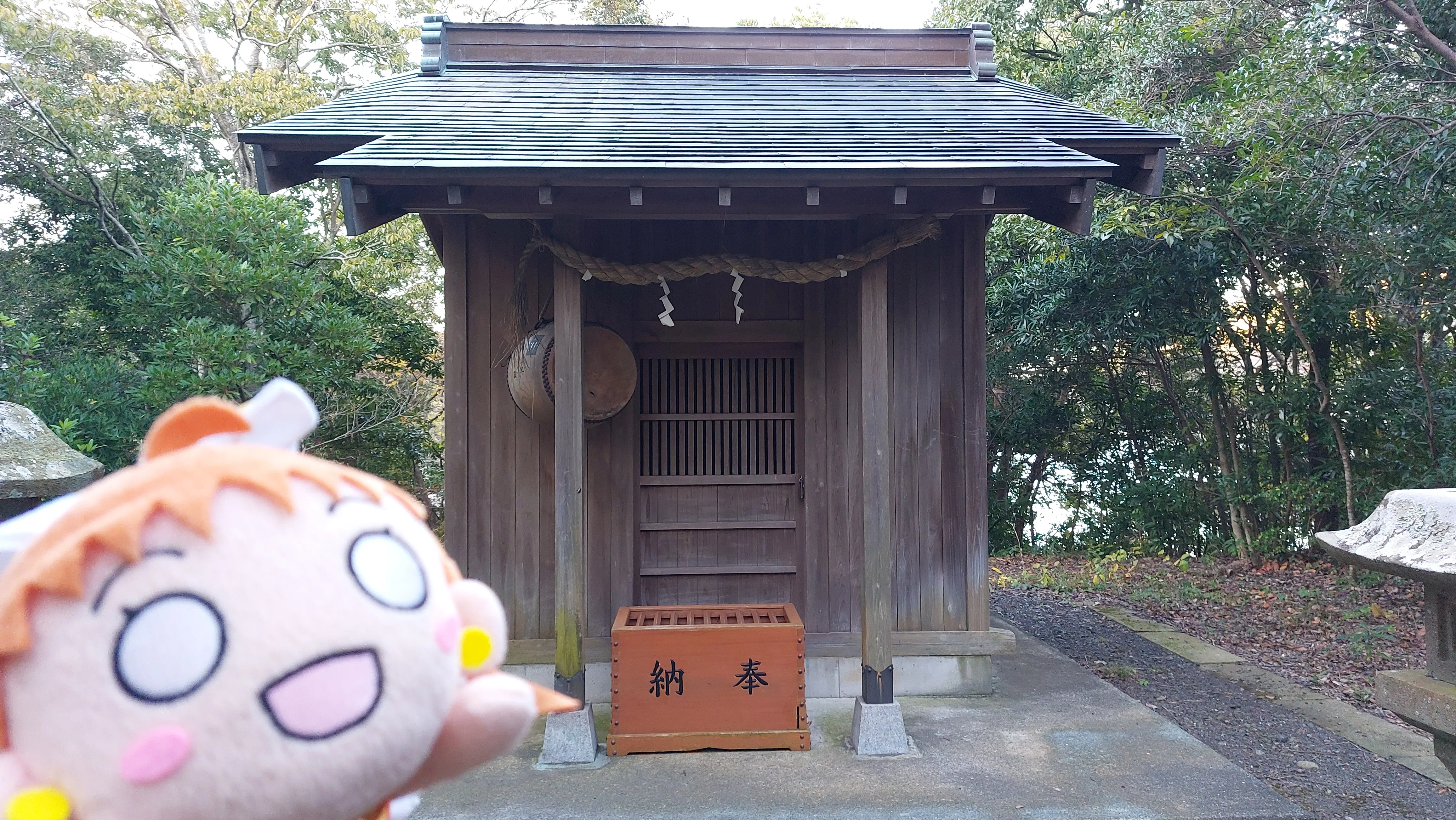
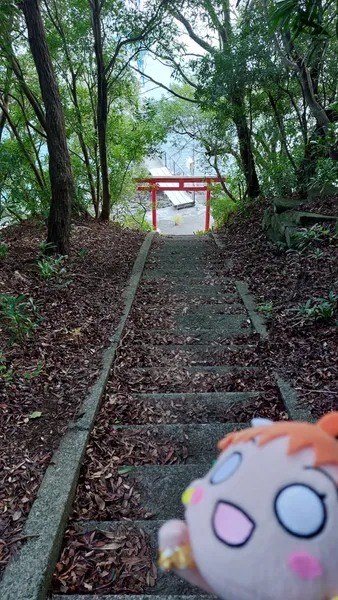
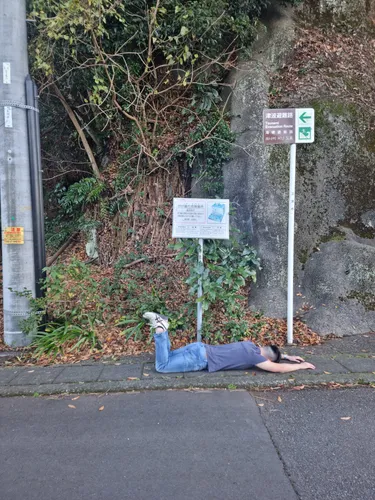
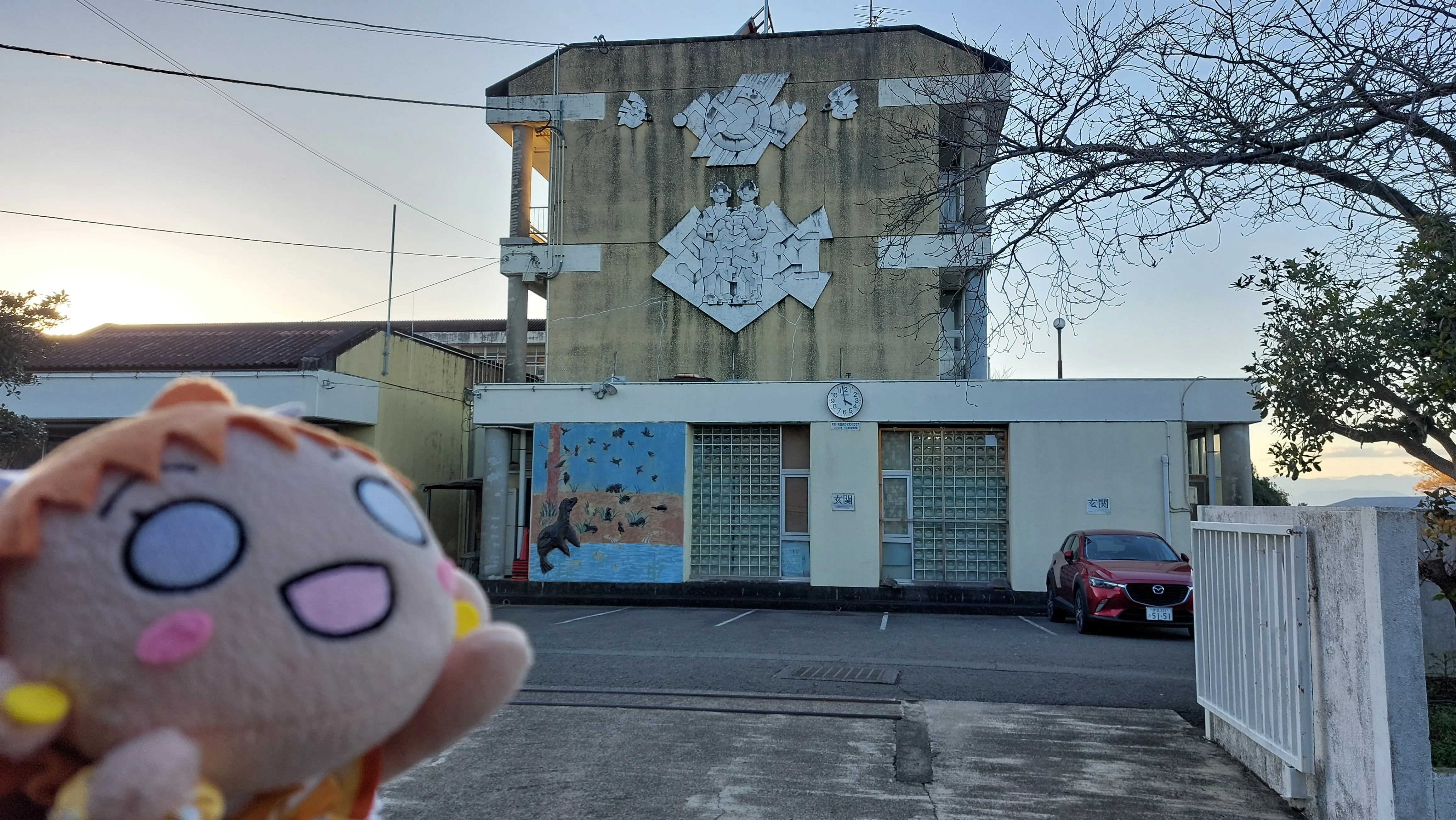
Other places I visited that I do not have pictures of
- The 7-Eleven where the 1st years are buying snacks while the 2nd years were practicing.
- The famous spot that had the “moment” between Chika/Riko in Season 1 Episode 10.
- The house that inspired Ruby/Dia’s house. It’s private property, meaning pictures are not welcome. We saw a lot of children inside so I thought it was a daycare.
It was getting late by this point, so we returned our bikes at a bike stop near the Awashima Ferry Terminal (no way we were riding back) and took a bus back to the main city. We were pretty tired and slept the entire trip.
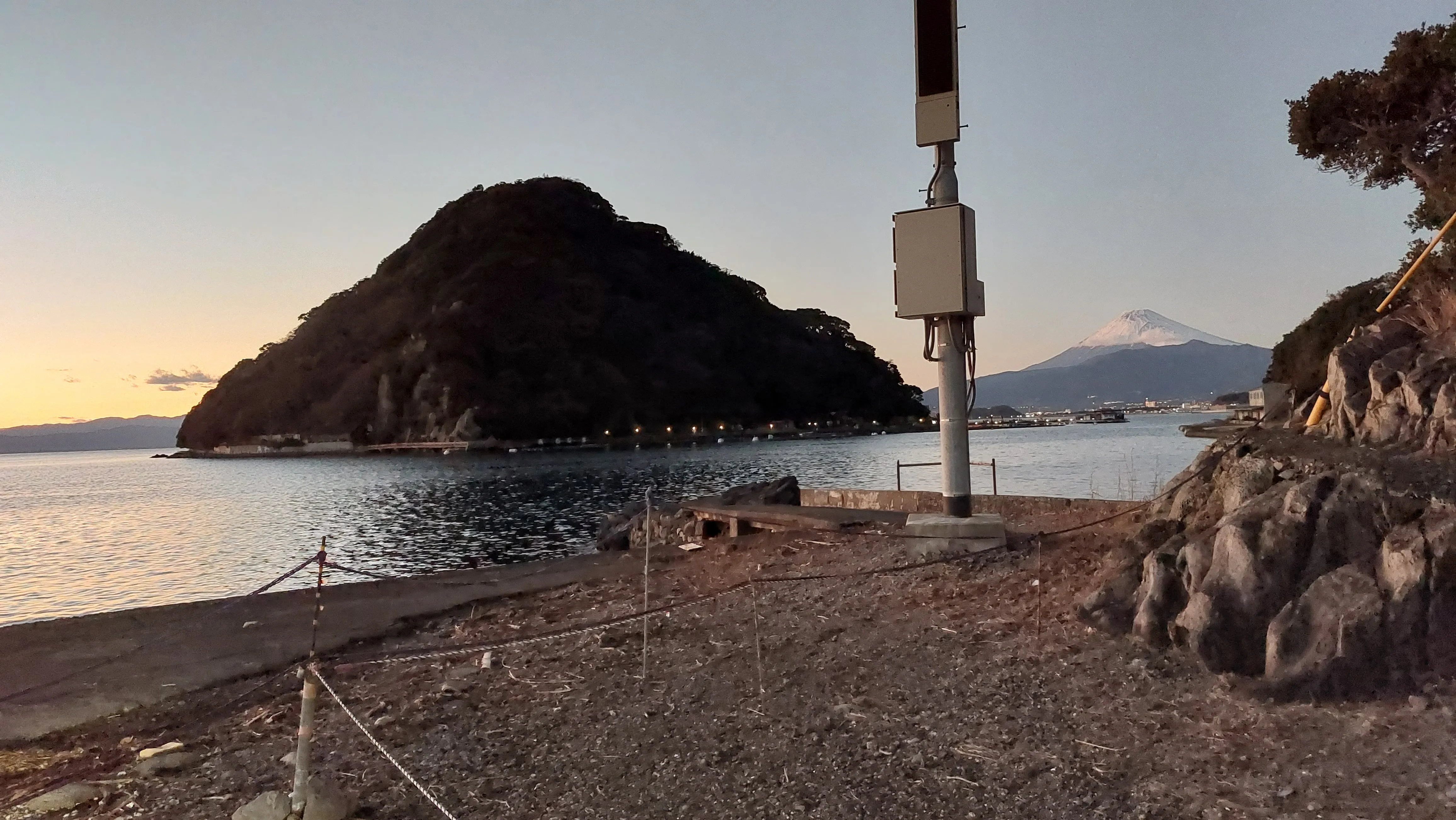
Back in the city, we shopped at a mall near the station, then went for dinner. We went to eat at a Chinese izakaya, during which I accidentally let slip that I know a bit of Chinese and the owner enthusiastically started talking to us in Chinese. She was from China, and had moved to Numazu many years ago. Unfortunately, my Chinese isn’t great, but my friend was able to communicate with her, so I was spared the embarrassment.
We ended the night by going to Gamers! and animate Numazu. They are distinct shops but are actually owned by the same parent company. I was very tempted to buy art-books but I managed to resist the temptation to wait till I got back to Tokyo at the end of the trip so I didn’t have to haul whatever I bought around the country.
We ended the night with a FamilyMart Fried Chicken a.k.a famichiki (it was my first time trying some. Overall I think it’s too oily for me), some snacks and went back to chat in our hotel rooms.
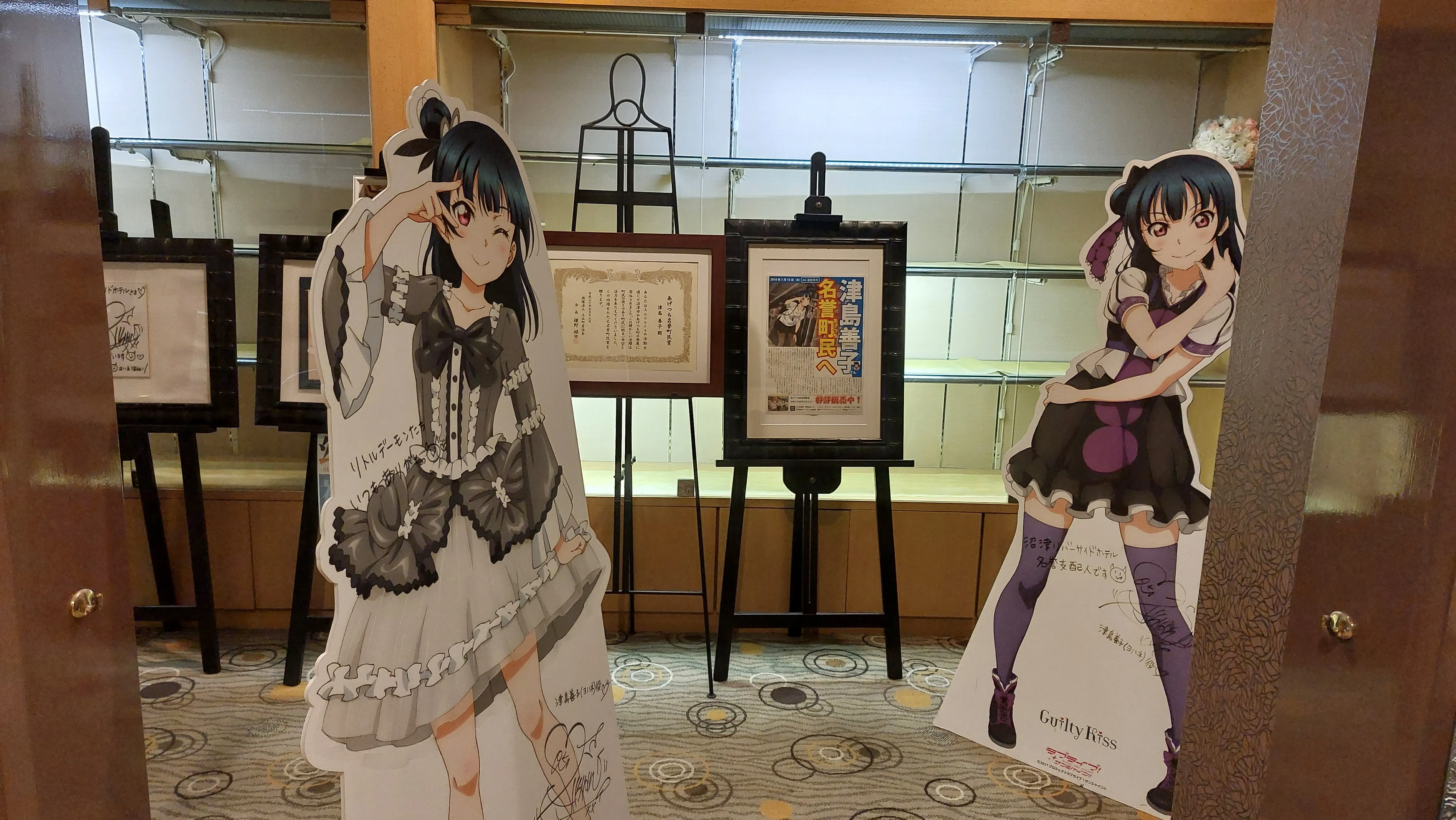
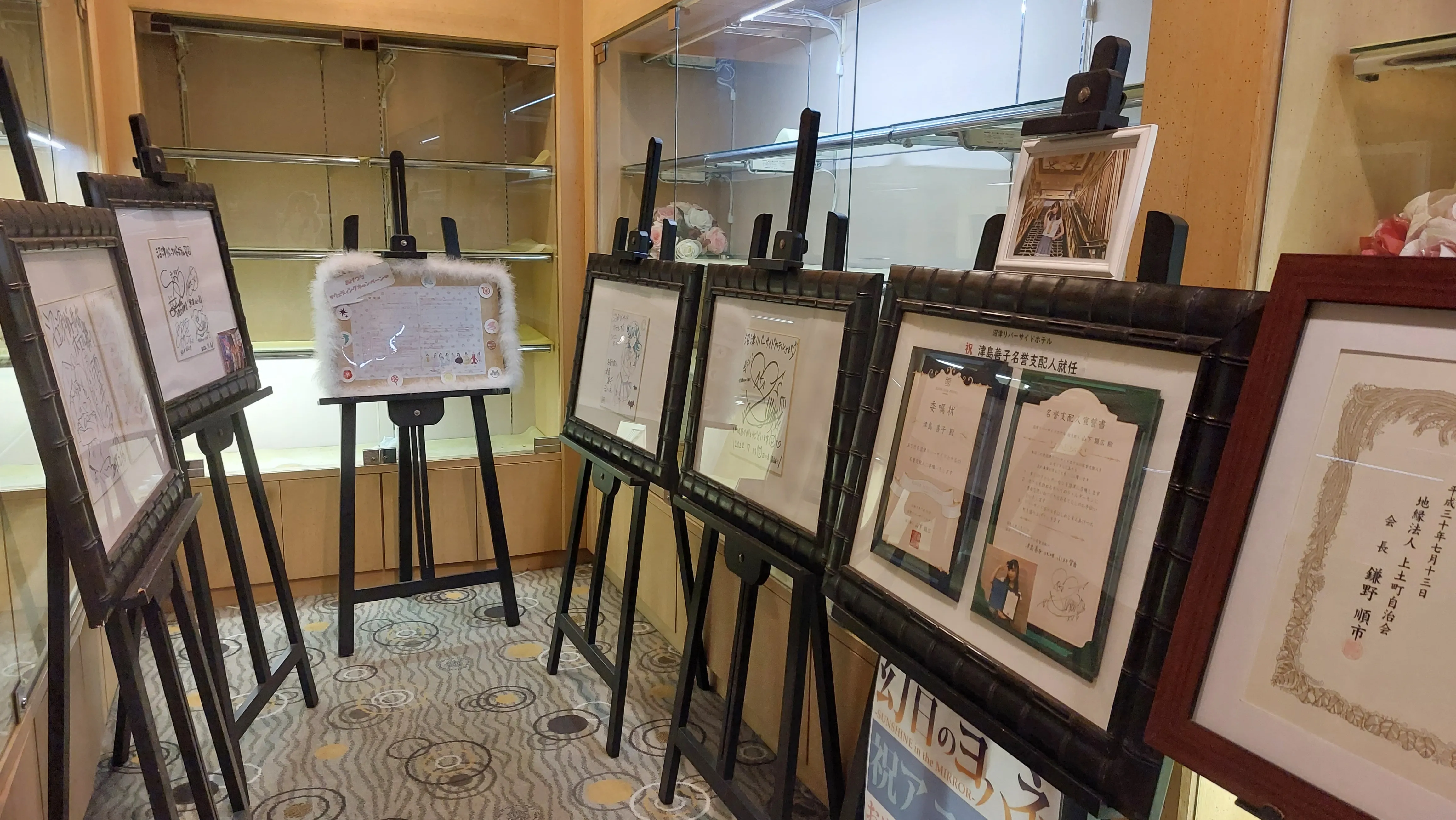
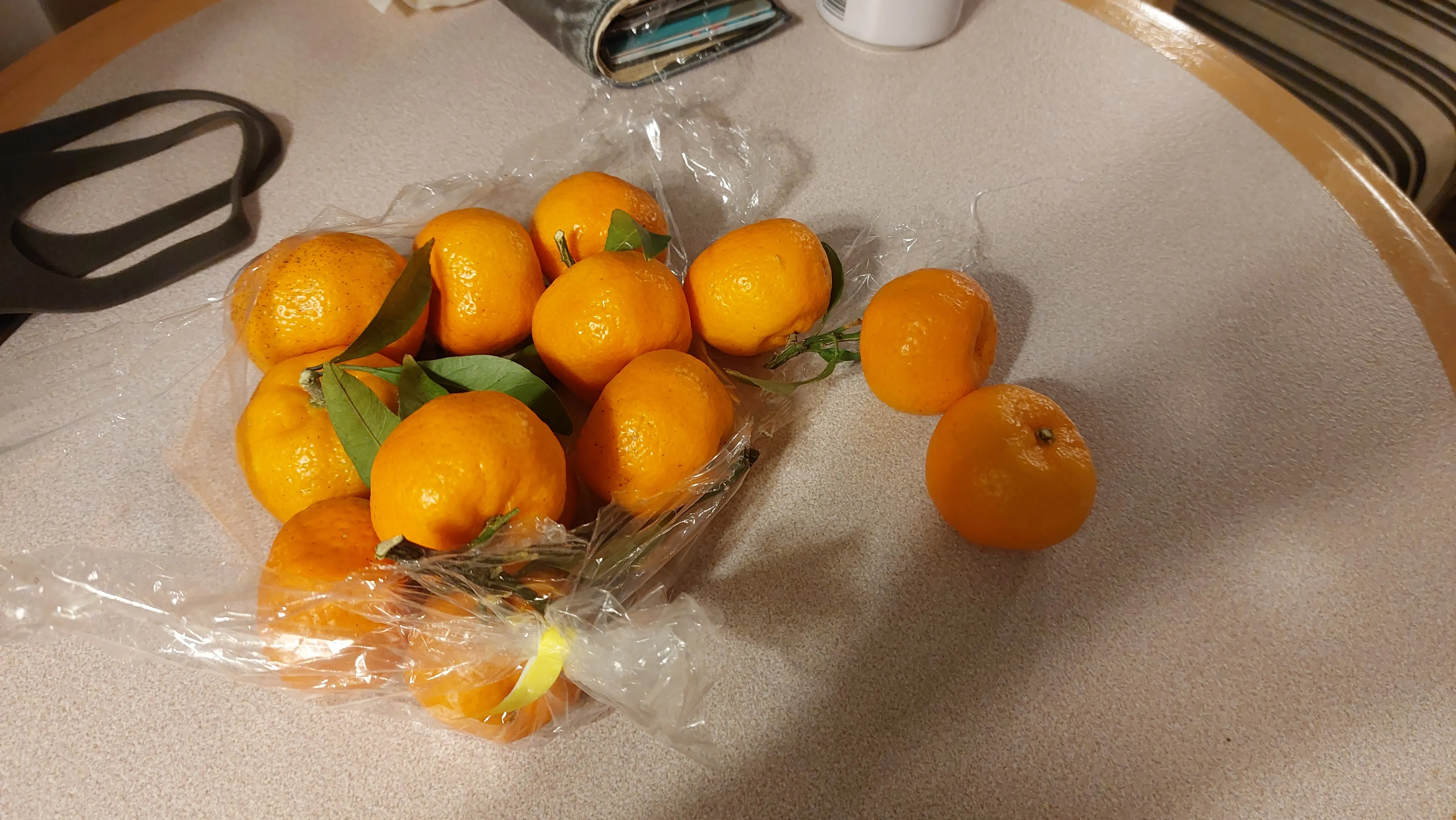
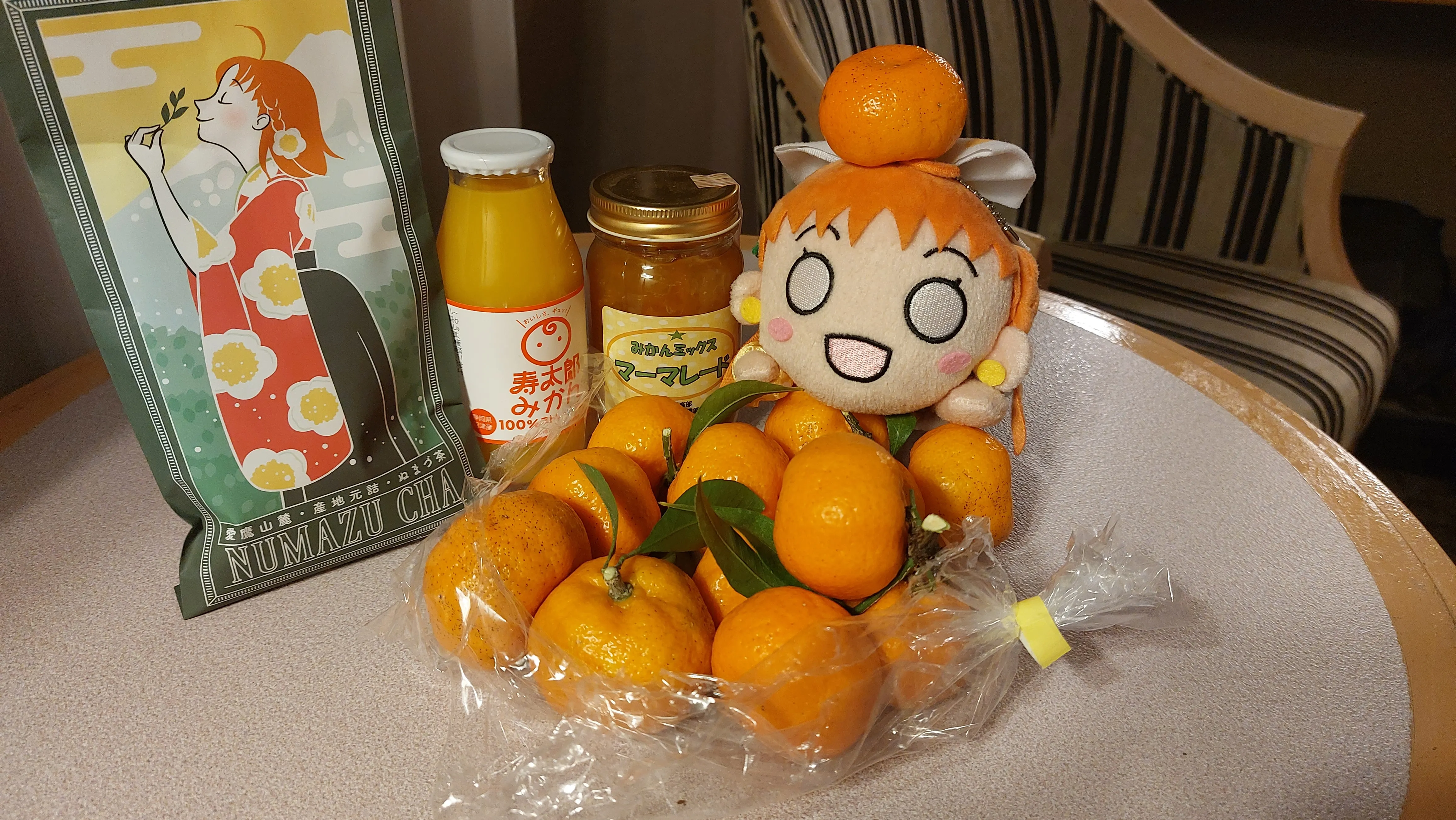
Hotel Review: Numazu Riverside Hotel
Here is the hotel review section! I’ll be reviewing the hotels I stayed in each part of the trip. The sections will only appear on the first night that I stay in that particular hotel. I rarely take photos of hotel rooms, so you’ll have to trust my words for this one.
When I first wrote this section, I considered that hotels only needed to fulfill a few things - they should be clean and secure even if the building is old, the bed should be okay and not broken, and the bathroom has to work properly. Since this trip, I’ve stayed at many different business hotel chains, boutique hotels, luxury hotels, AirBnBs, etc in Japan. While my expectations of the amenities change depending on which hotel chain I pick, my baseline requirements stated above have not. Therefore, any hotel that meets the above still gets the “all good” from me.
Fortunately, Numazu Riverside ticks all these boxes for me. My biggest issue is the separate cold/hot tap for the shower. Perhaps I am smooth-brained, but I find it very difficult to get the correct pressure and temperature for the water with separate taps. I’m not sure if this is still the case or if the hotel has upgraded.
Here are some other thoughts:
- In the off-season, the room is stupid cheap. Think 5,000JPY per night. However, at certain times of the year (such as during the last week of July, when the Numazu Summer Festival is held), the price can skyrocket to 30,000JPY a night.
- The room is spacious, it is about 1.5x a typical business hotel room. Do note that I’m normally a solo traveler.
- The building and décor are old, and it shows.
- At the time of this trip, the keys to the room were an actual physical key that you would use to turn the handle. They have since switched to using keycards. Fortunately, you never needed to return the key to the front desk when going out.
- Depending on the room you get, you could get a nice view of Mt. Fuji.
- It has a HELLO CYCLING bike stop on the first floor where cars drive in to for pick-up/drop-off.
- It’s much nicer than Hotel Trend, though Hotel Trend is closer to the station.
- Incidentally, this hotel is owned by Kuretake group. There is a Kuretake Inn at the north side of the station which, in my opinion, is nicer and more modern.
- The location of the hotel is really good for the purpose of pilgrimages. Most of the Love Live! Sunshine!! pilgrimage locations are in the south side of the city, and this hotel is right smack in the middle of the south side. The hotel is about a 300m walk from the station, and has a bus stop to both the port and Uchiura right outside the hotel.
Day 2 (Tuesday)
My friend had to leave early to accompany his family who was in the city at the time to somewhere else. We planned to eat breakfast but he had some trouble packing, so I ended up just seeing him off at the station. While I enjoy traveling by myself, I have found that doing it too much can get quite lonely. Even introverts need some human interaction y’know.
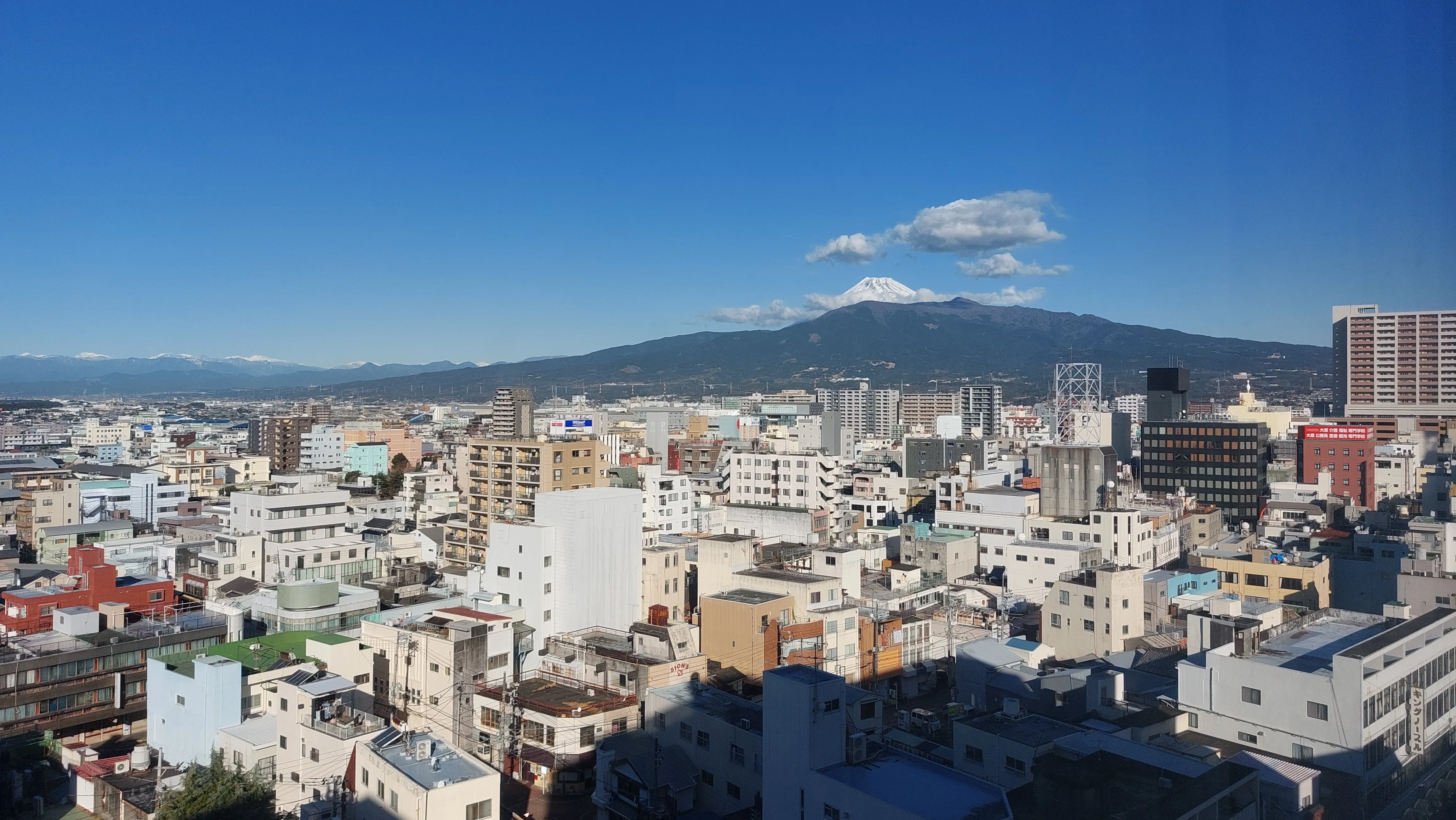
I would start my day off by visiting Izu Mito Sea Paradise that I did not get to visit yesterday. I took a bus this time to Uchiura. The aquarium was surprisingly busy on a Tuesday morning/afternoon, perhaps because it was near the New Years. I saw 2 dolphins shows, looked at their aquarium, ate some soft serve ice cream which is always welcome, and bought one hell of an expensive picture that they take of you as you enter (5,000JPY!). I tried to find food in Uchiura but couldn’t really find any, so I just took a bus back to Numazu City after finishing the aquarium.
It should be noted that Japan doesn’t do aquariums, or even zoos very well. The animals are often kept in small enclosures, and the exhibits are not very informative. This is the case even in places like Tokyo where there is presumably much more footfall and funding. Japan just kind of sucks at the whole animal welfare thing.
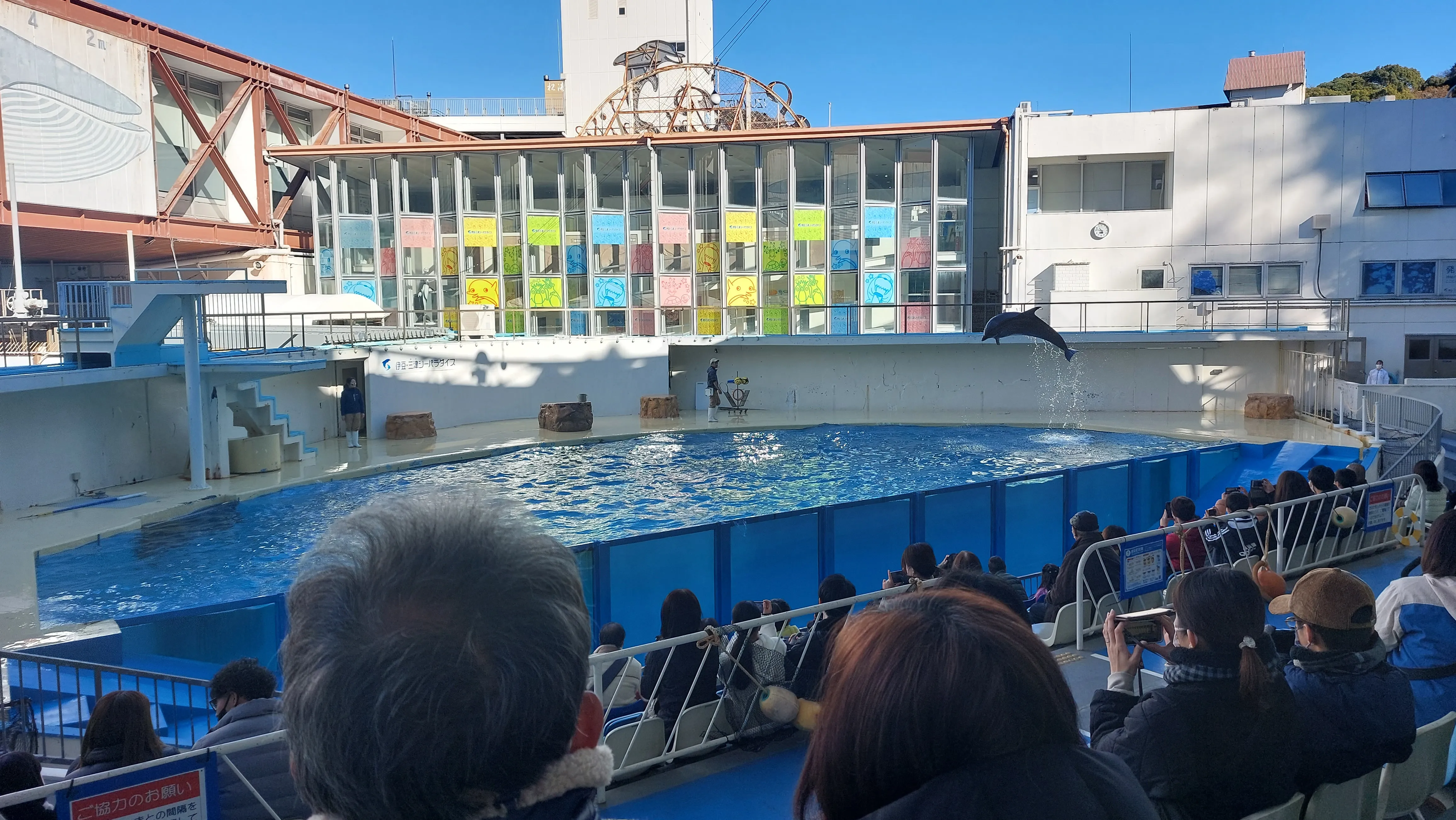
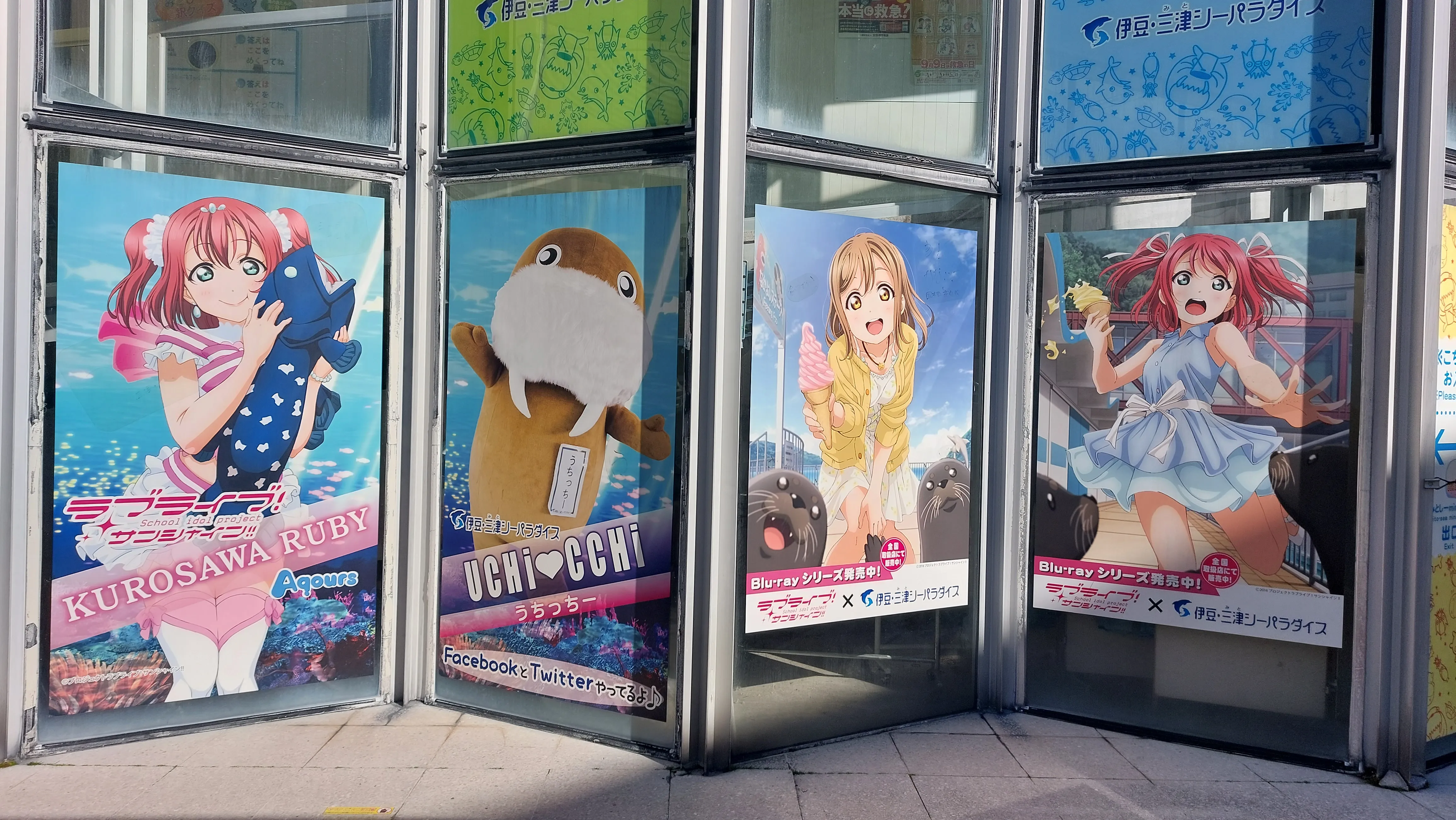
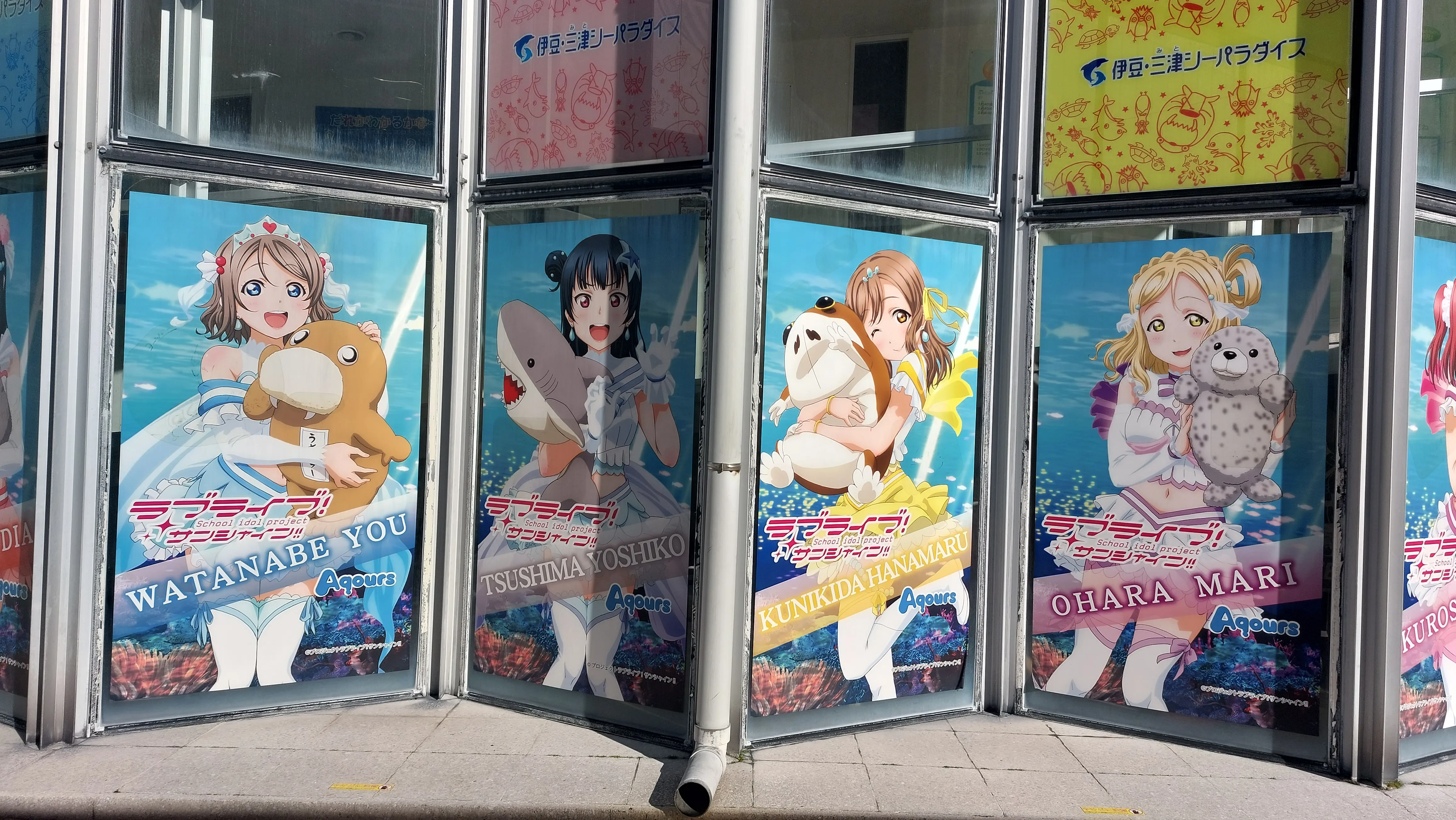
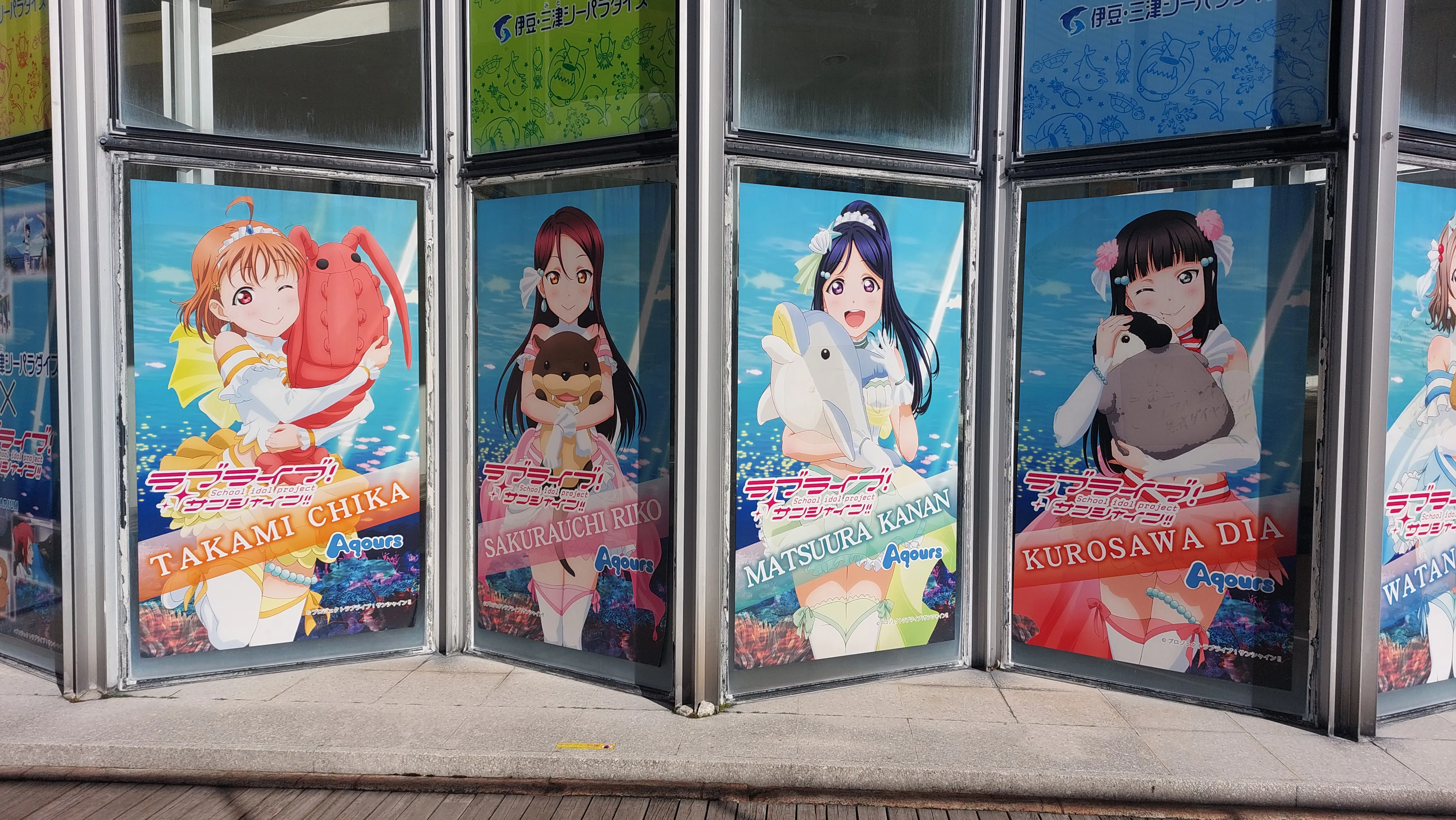
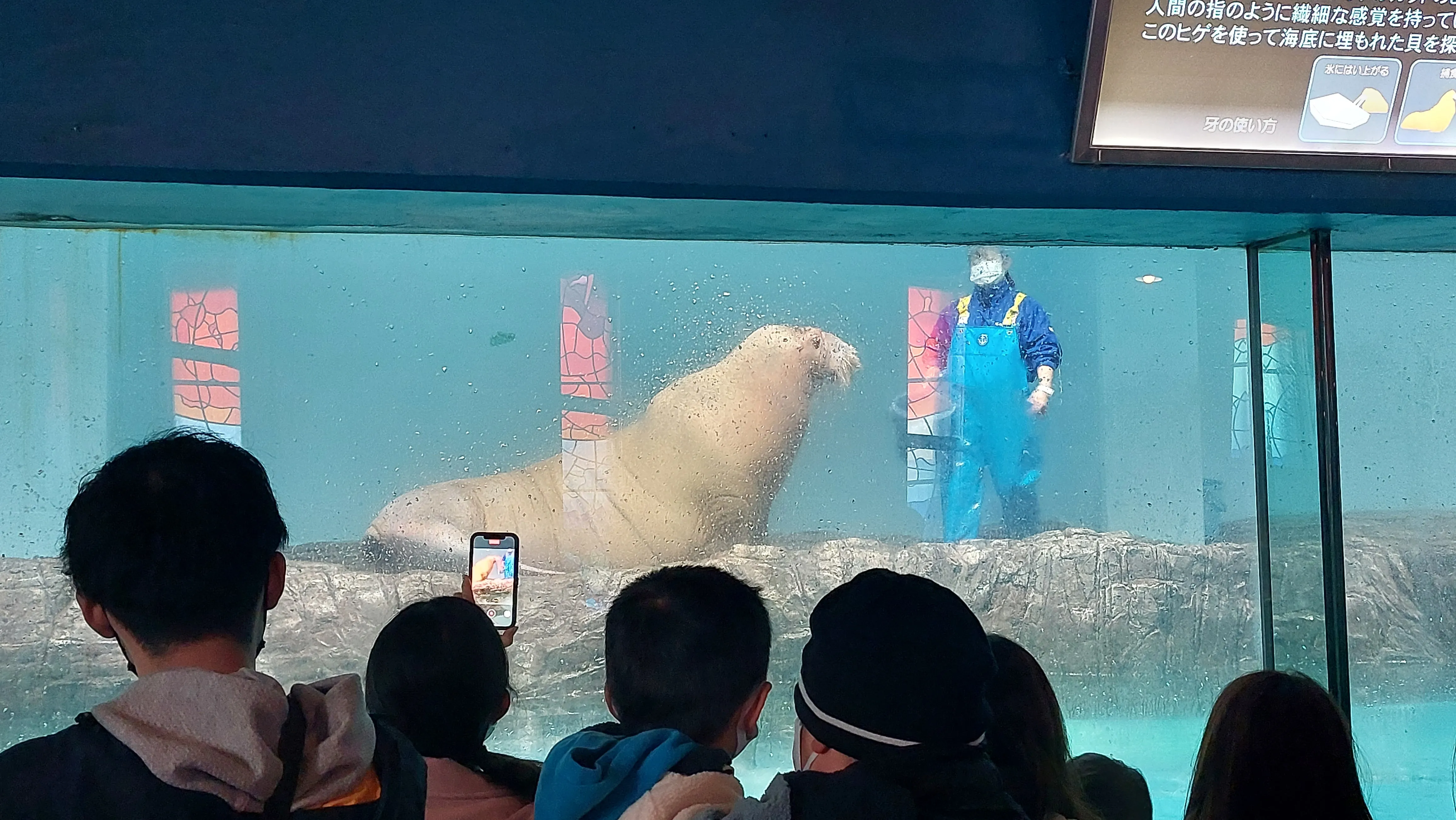
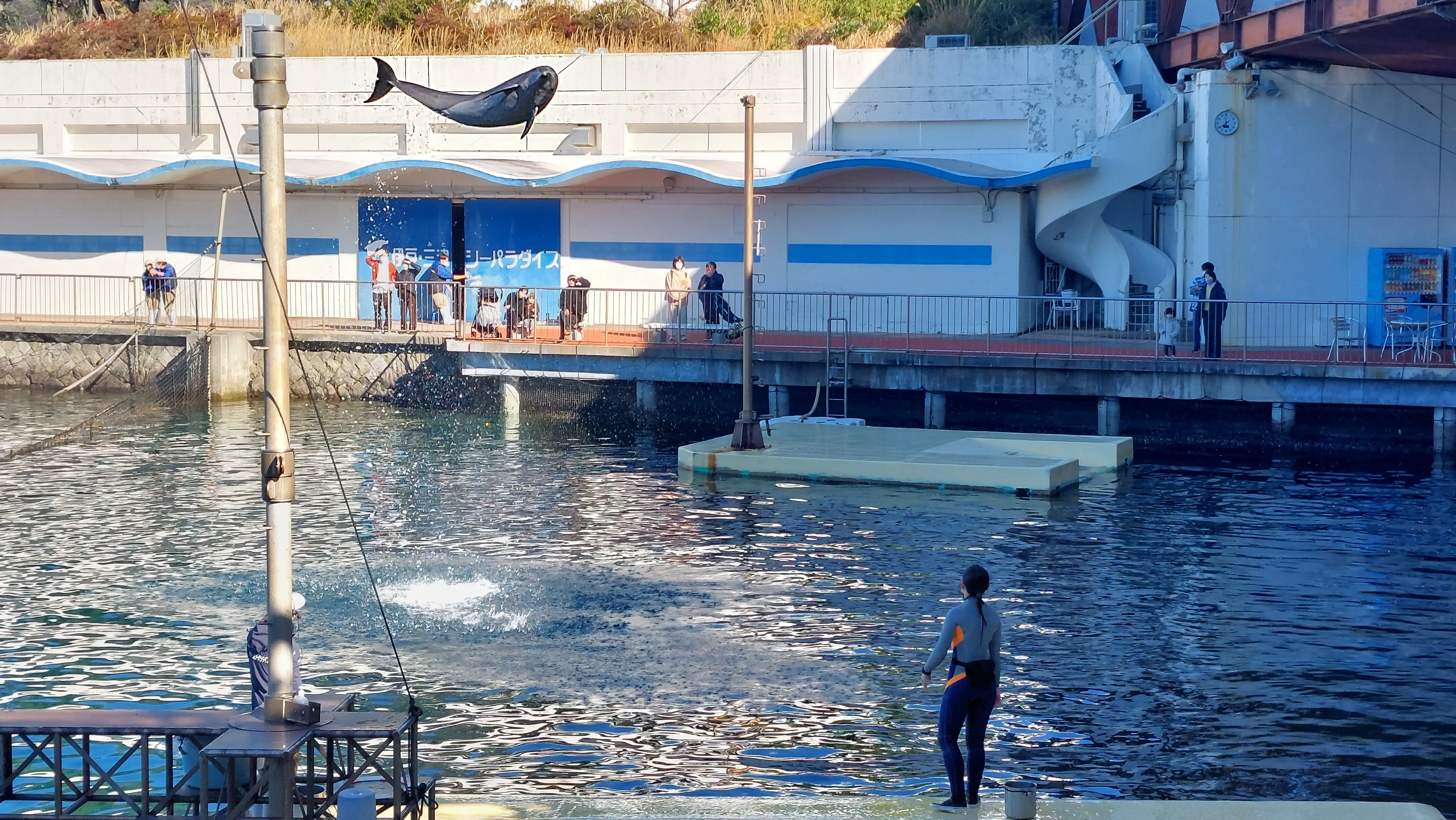
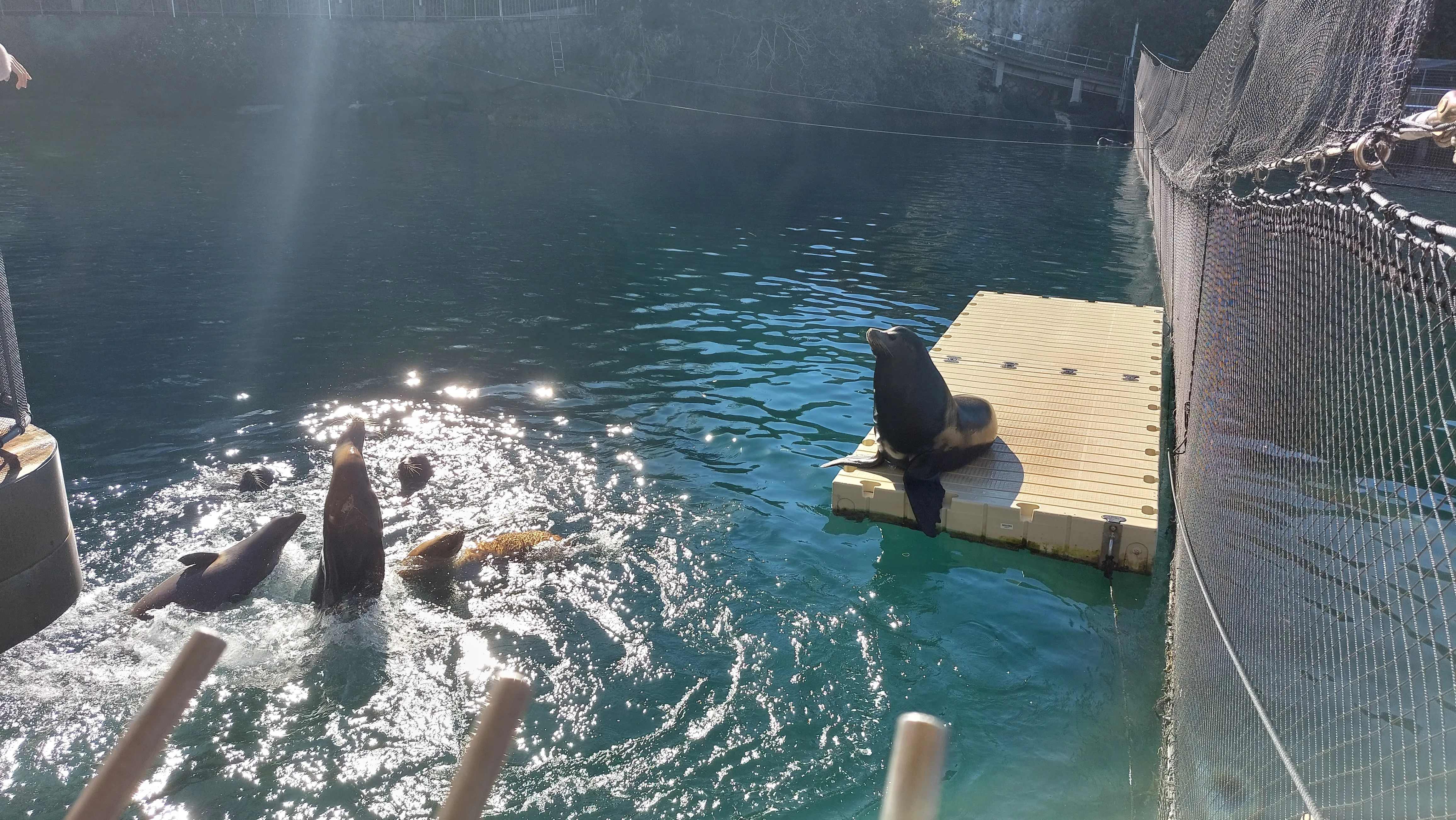
Back in Numazu City, I ate lunch at a random ramen shop near Nakamise shopping street, it was alright. I heard from a couple of friends later that this shop isn’t known to be great.
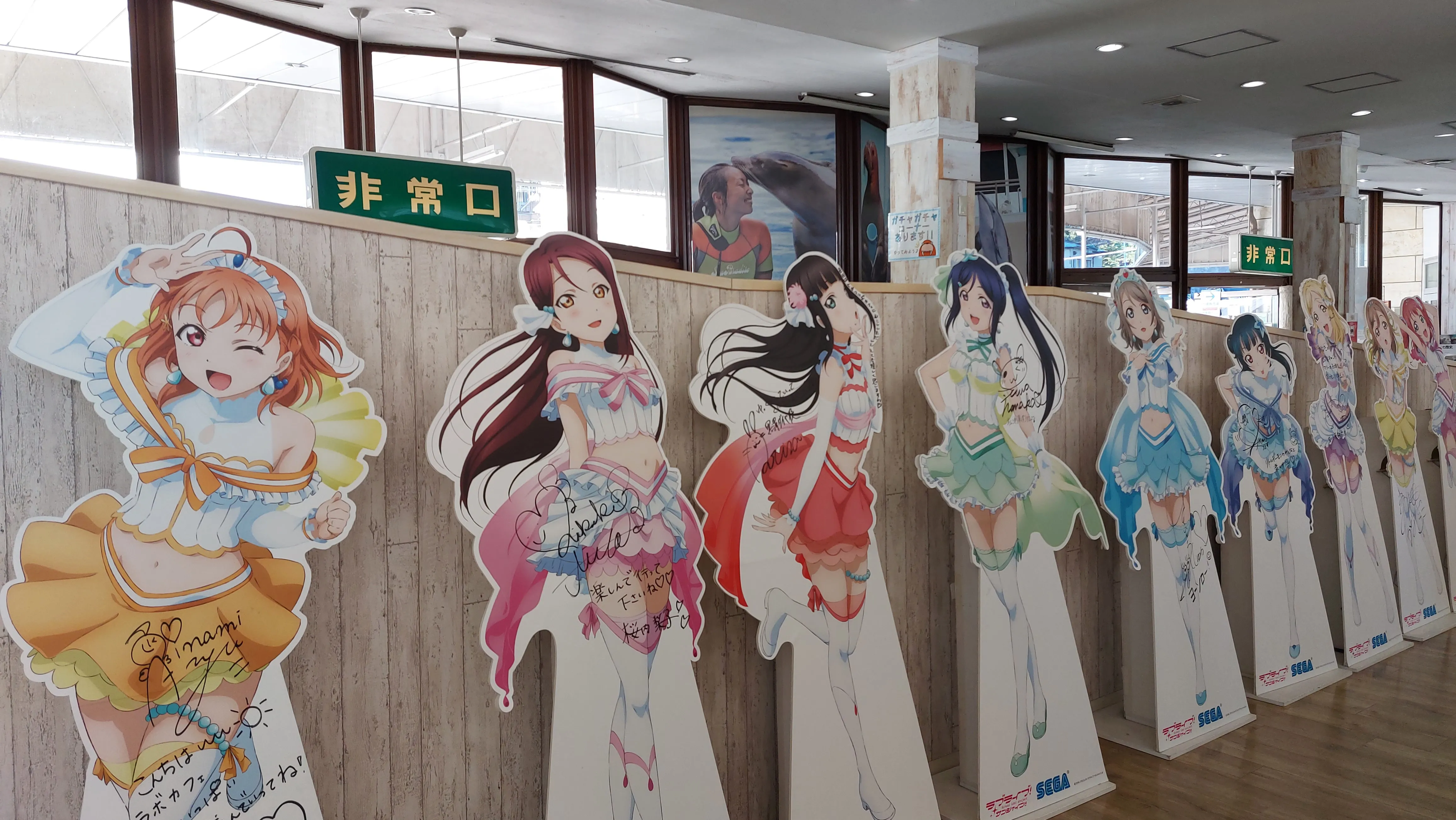
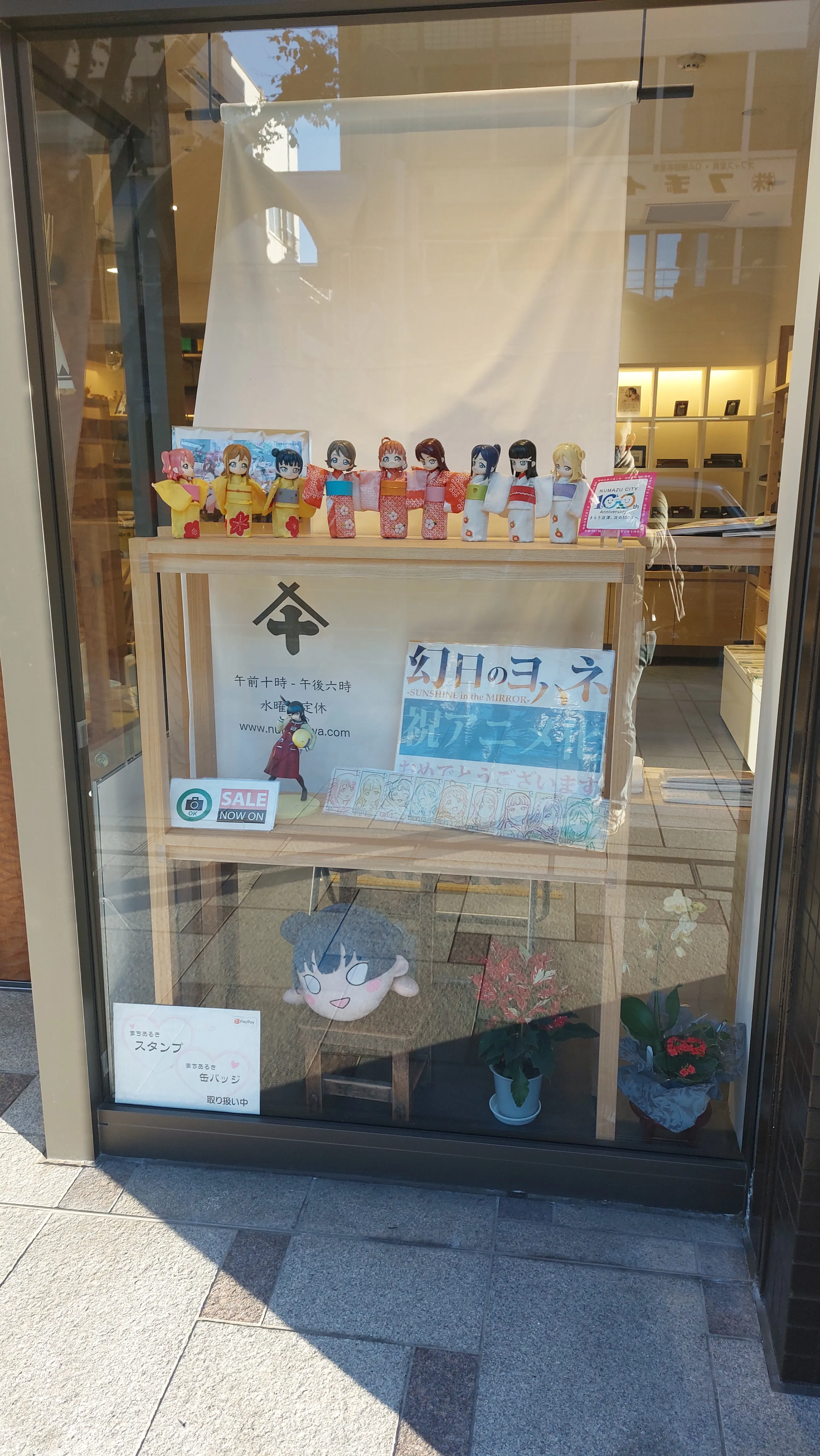
After lunch, I went around the city to continue the pilgrimage. There are not many parts in the main Numazu city that are significant to the anime. However, some stores and places around the city have Aqours on their displays. Here are some that I took a picture of:
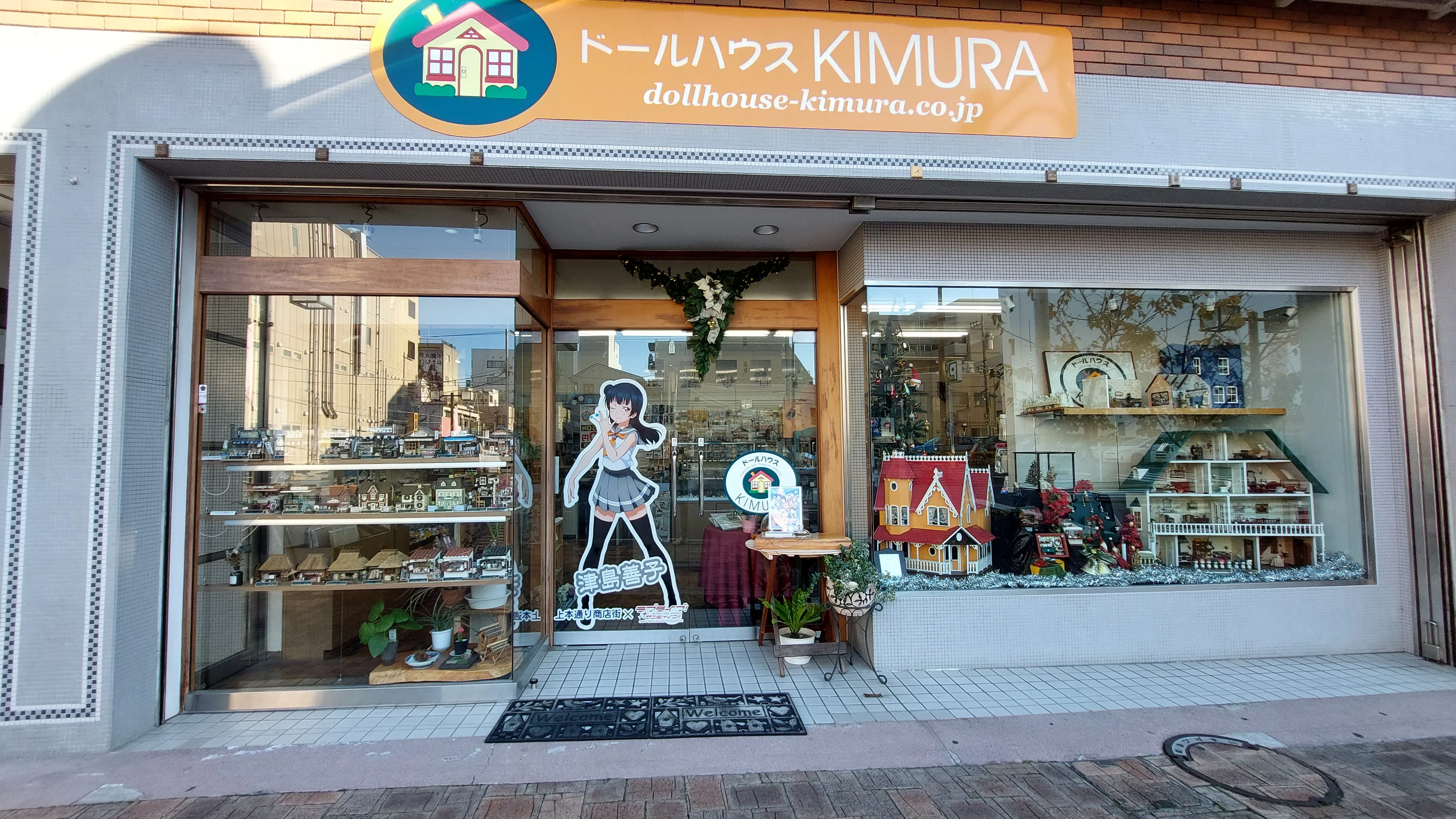
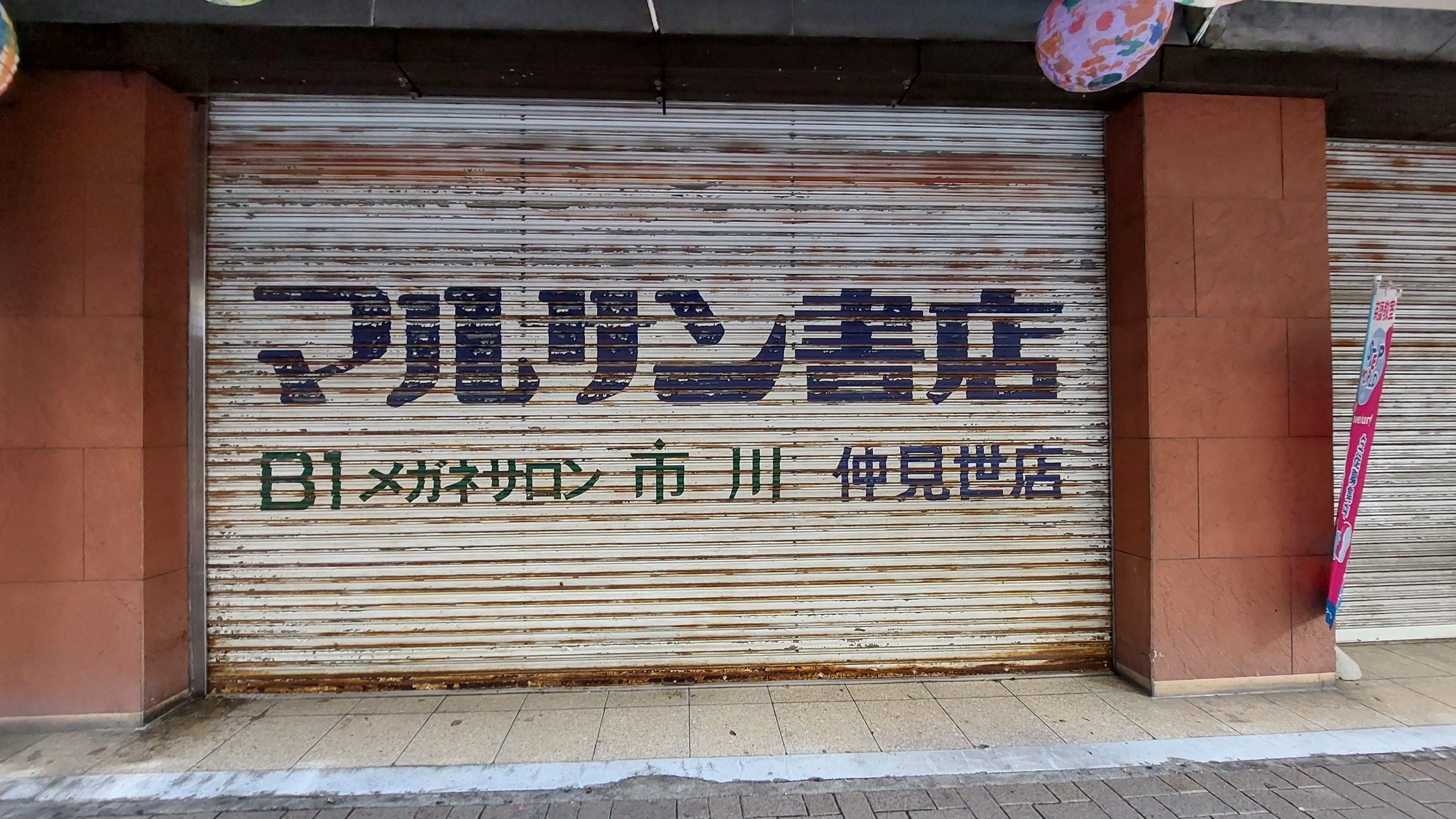
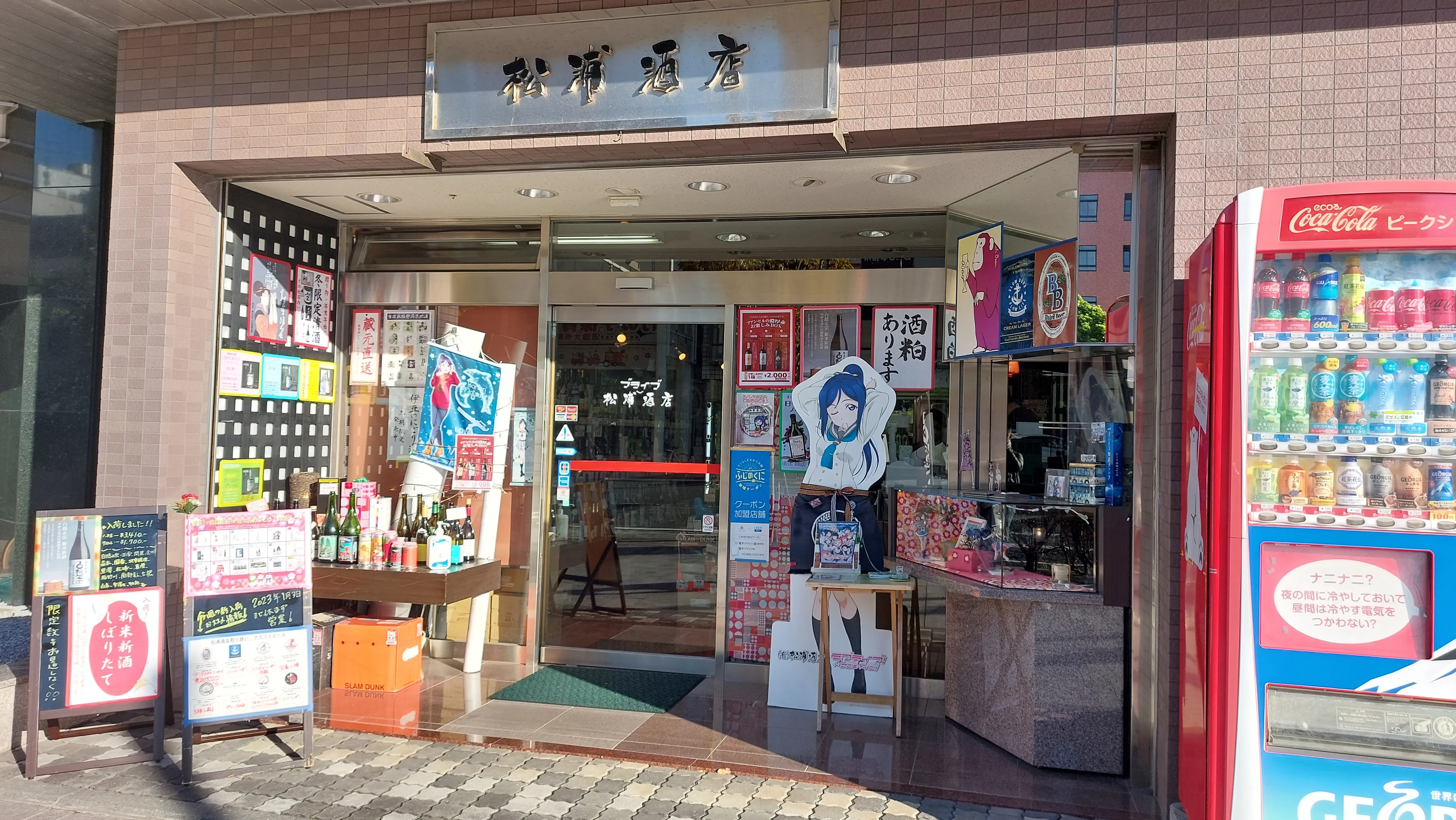
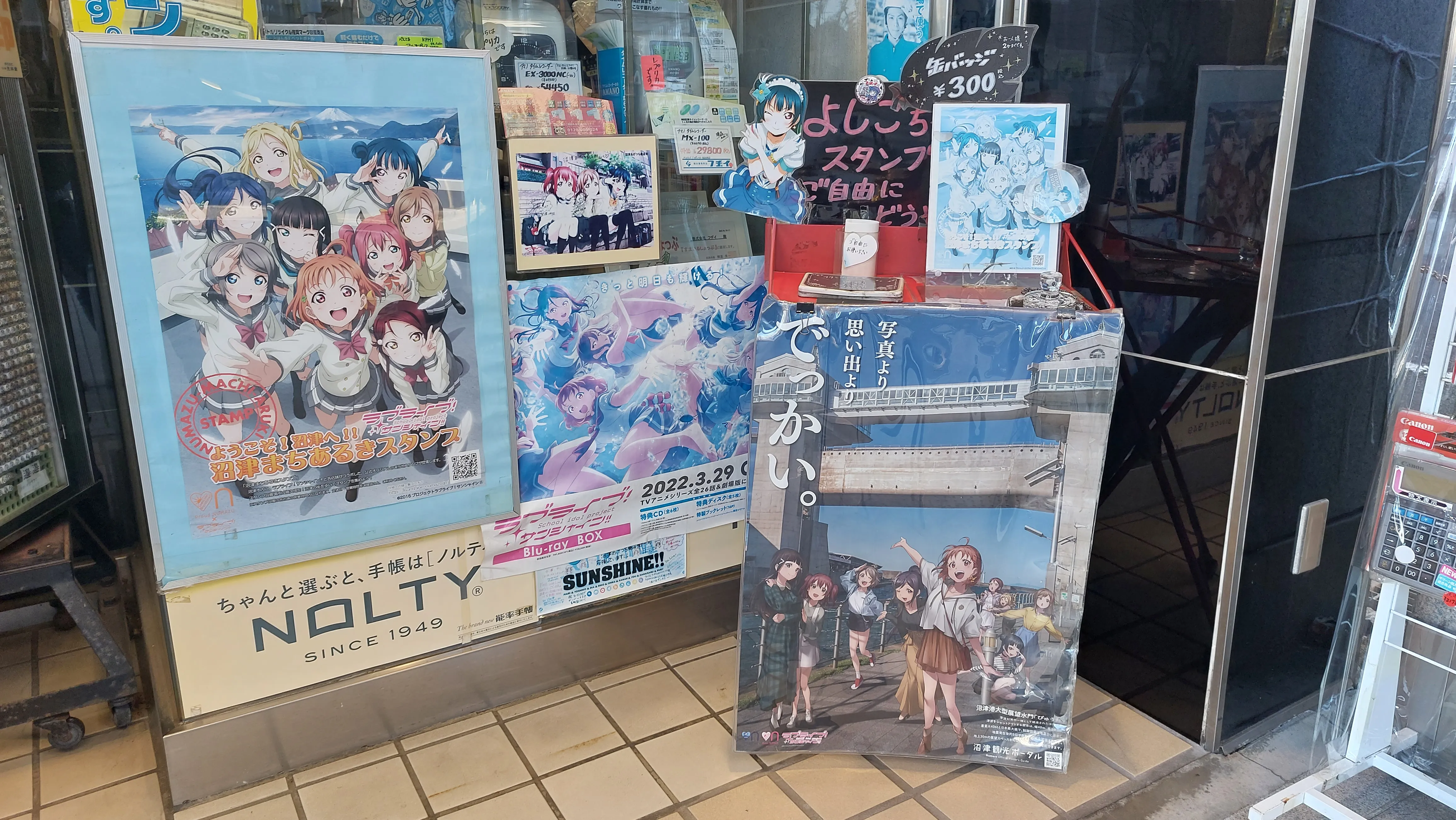
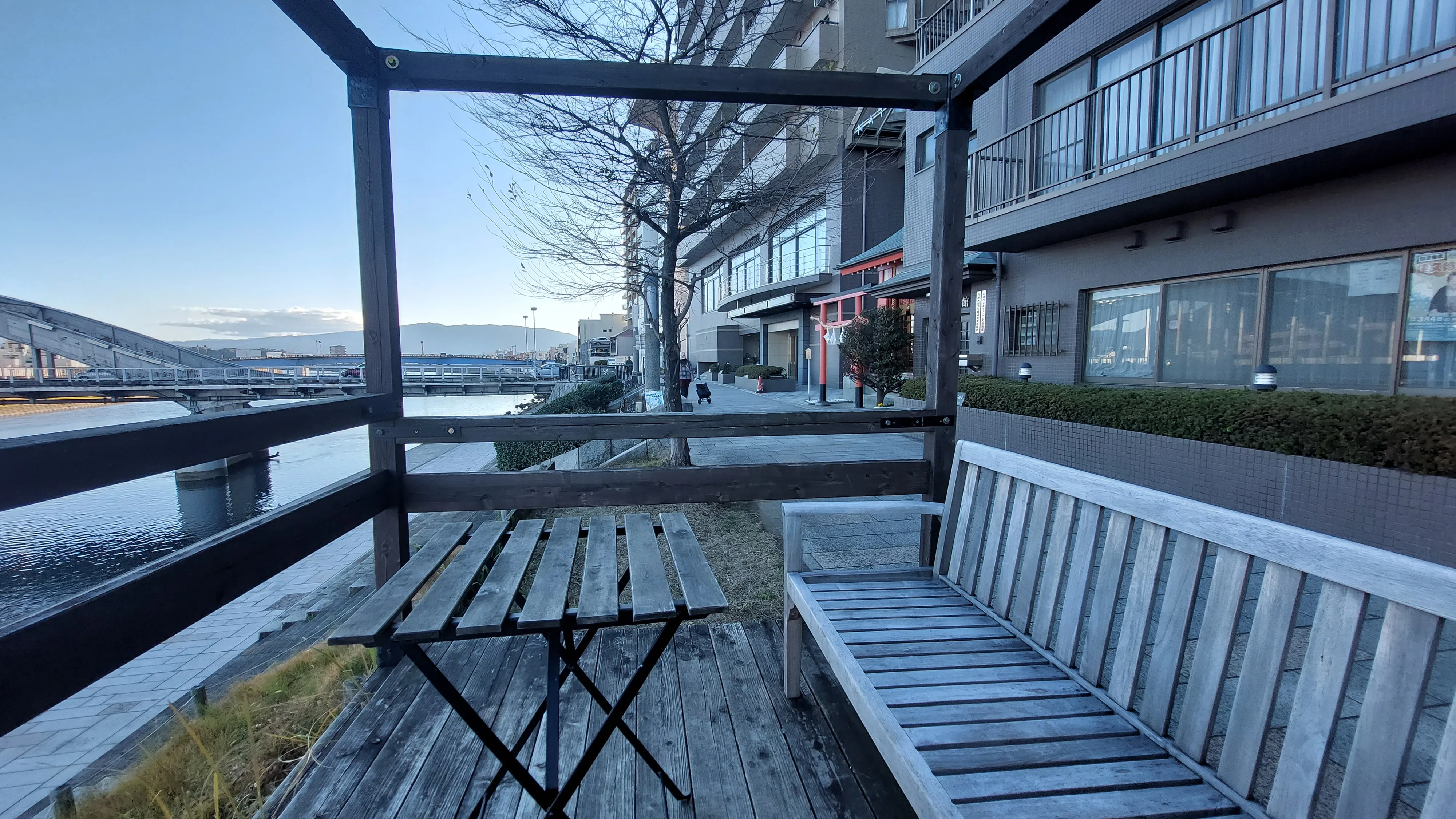
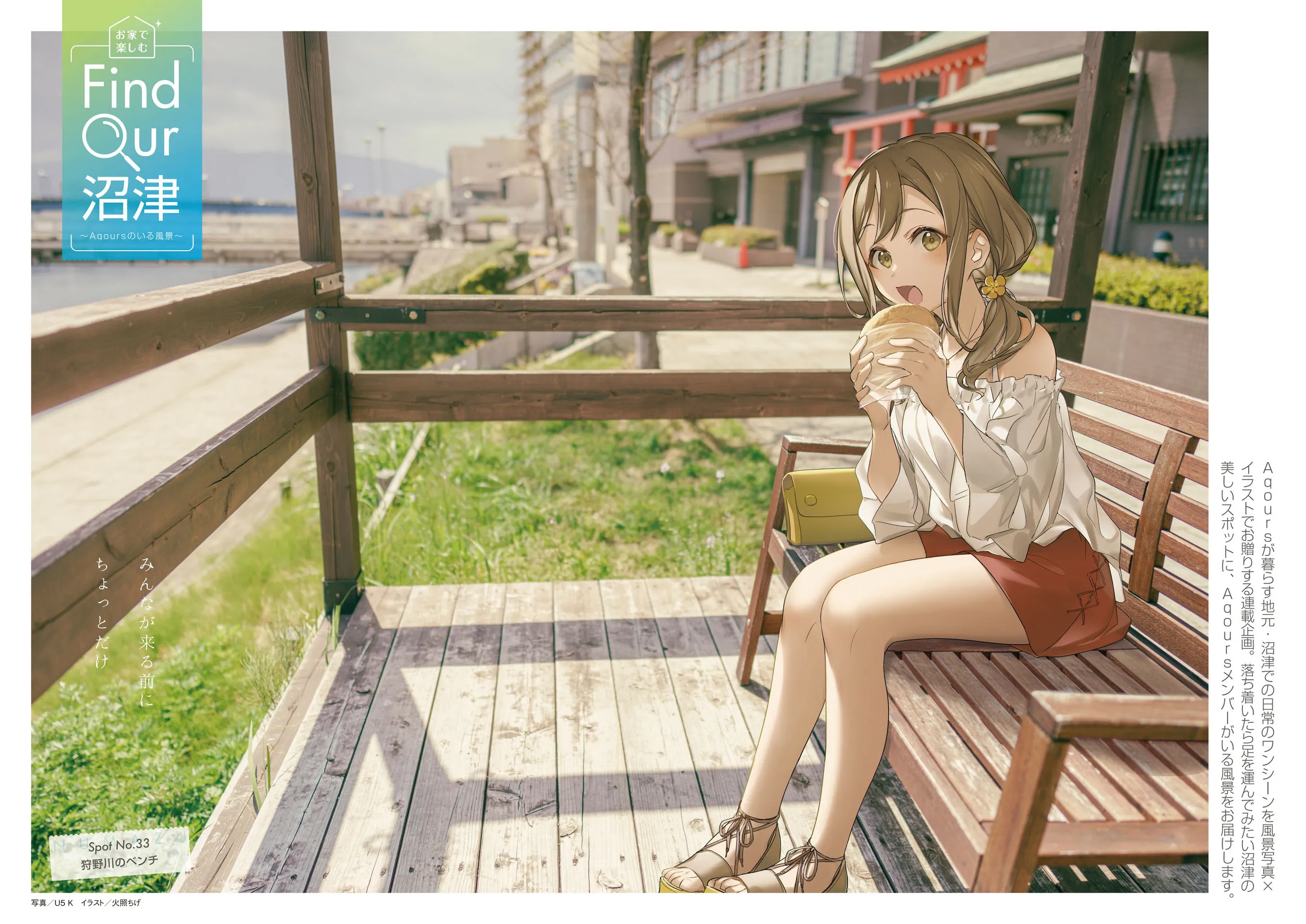
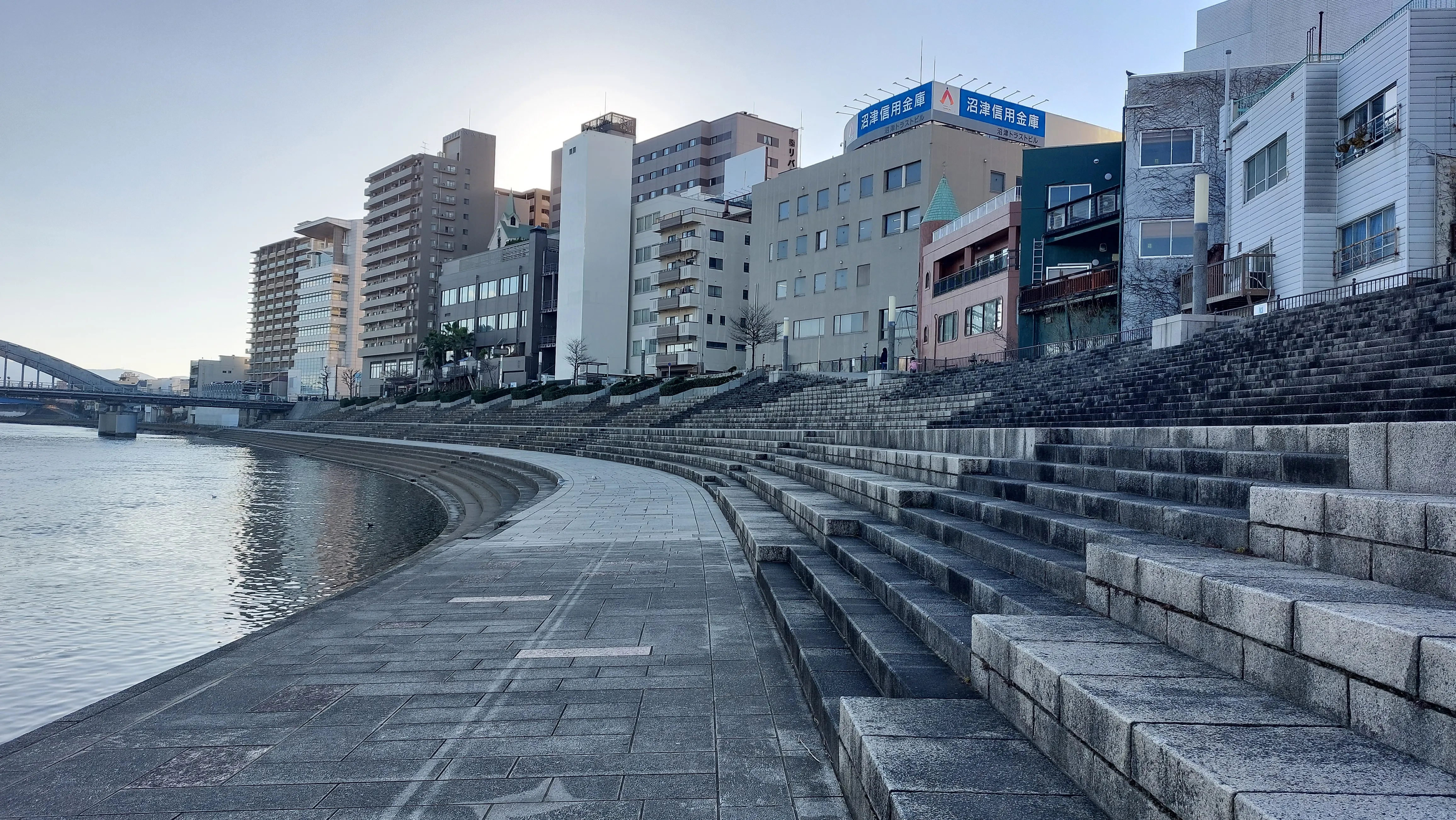
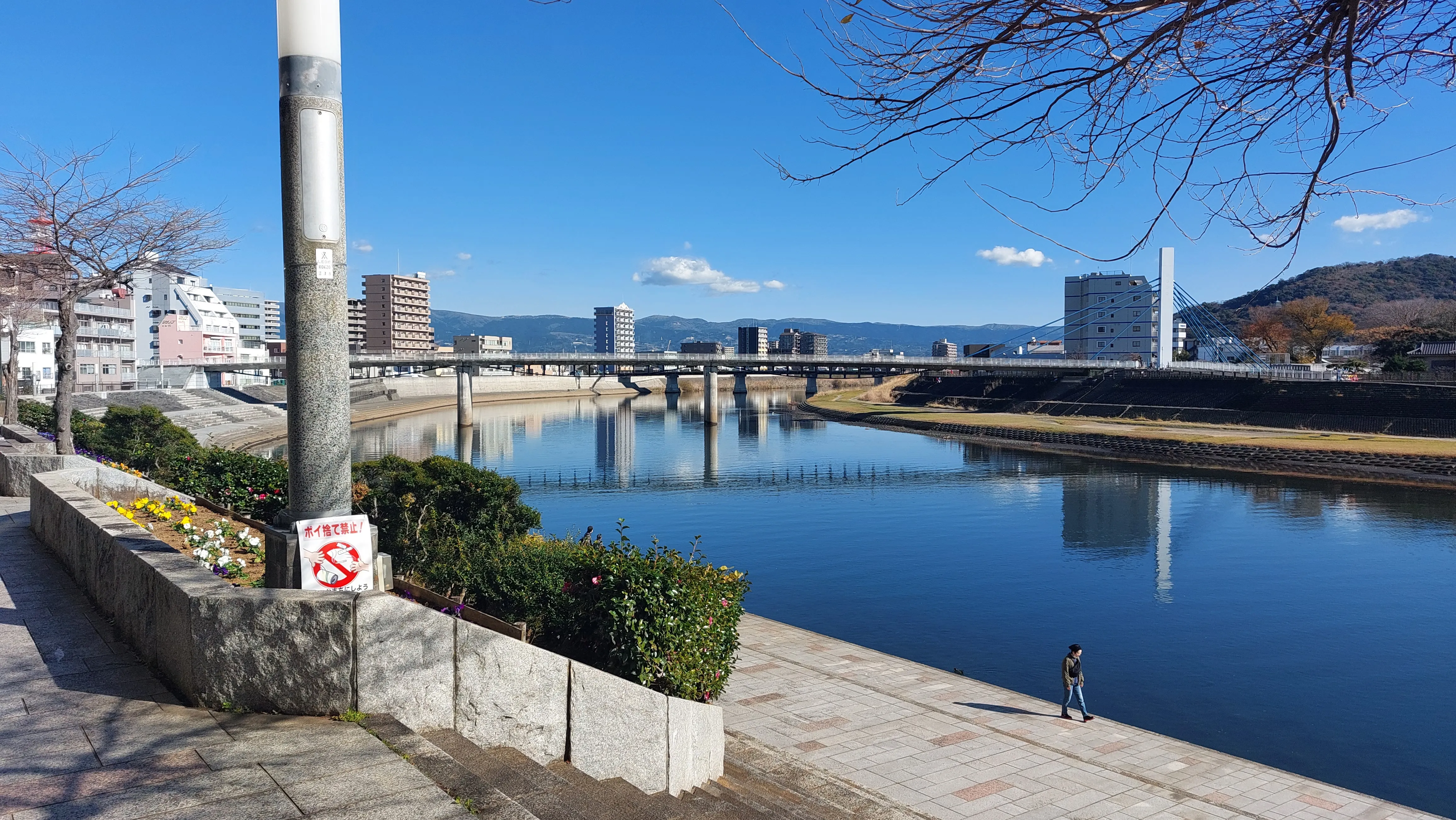
It was a cool (pre-)winters day with temperatures at ~5C. I sat at these river-side bleachers for a good hour or so to finish reading a light novel, taking in the peaceful atmosphere of the city in the meanwhile. I grew up in a densely populated city, the very definition of “hustle and bustle”, and as it is close to the equator, it experiences a lighter version of Tokyo’s worst summers all year around. To be able to comfortably sit outdoors, without the insistent crowds of the big city and the sounds of the river flowing by was a cathartic experience.
For dinner, I took a long walk to Numazu Burger, with lots of Love Live!
Sunshine!! merchandise focusing mostly on Yoshikohane. The burger was good,
but I forgot to buy their speciality… I bought a container of AZALEA (a
sub-unit within Aqours) popcorn that I thought was a drink. The popcorn flavour
was, honestly, gross. It was some kind of strawberry flavour. The container now
serves as a place where I store my keychains at home.
To be updated…
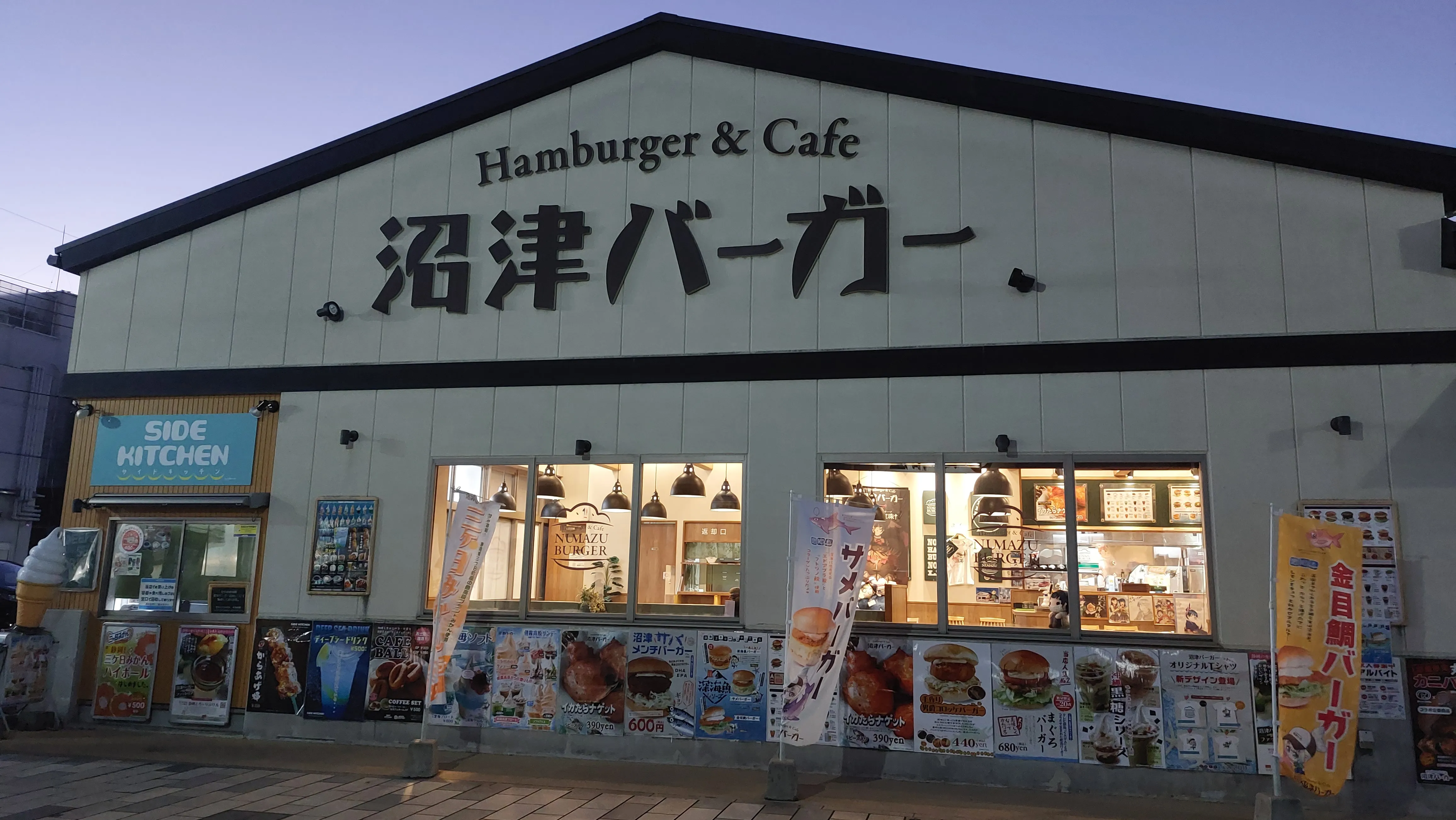
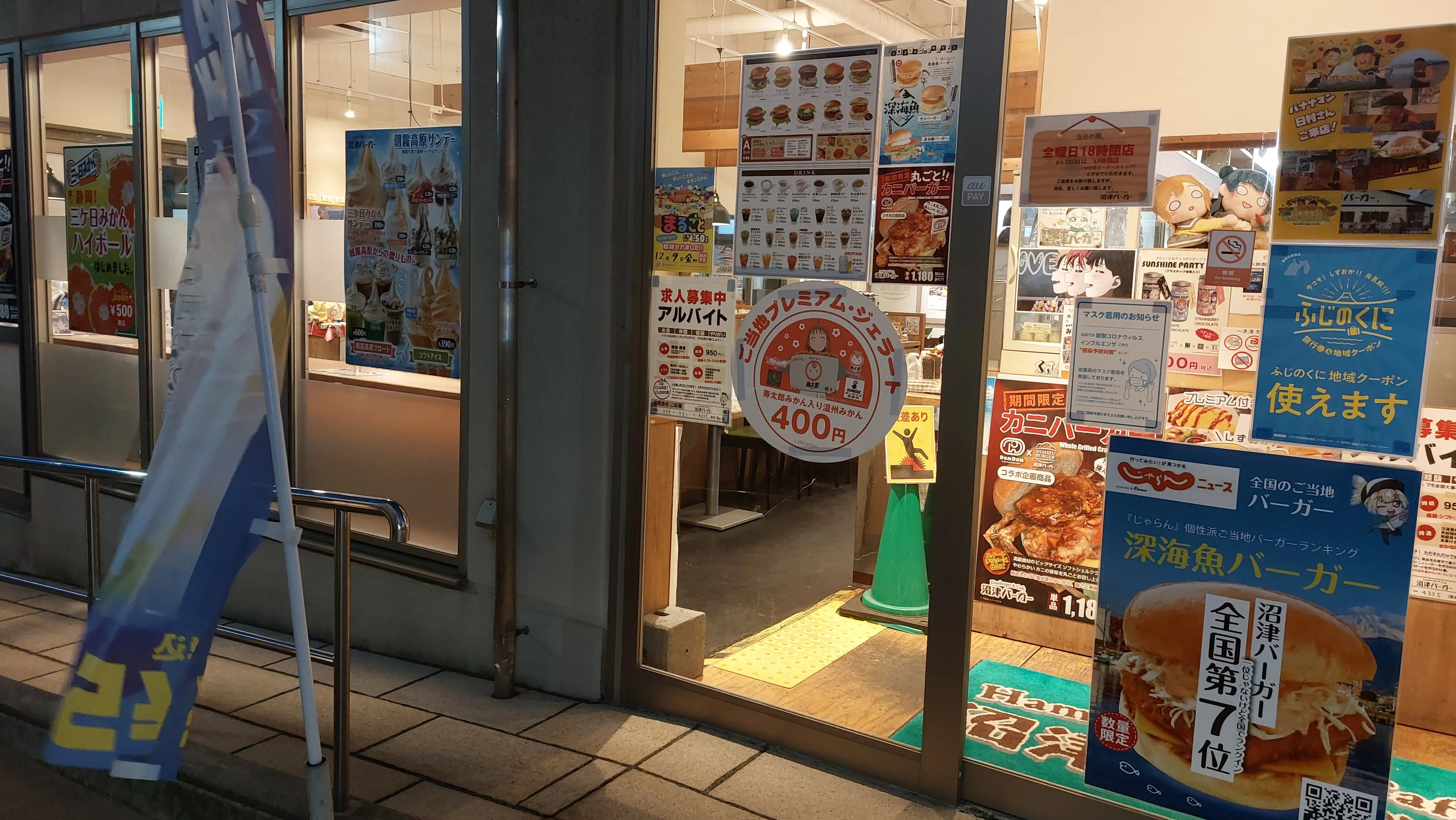
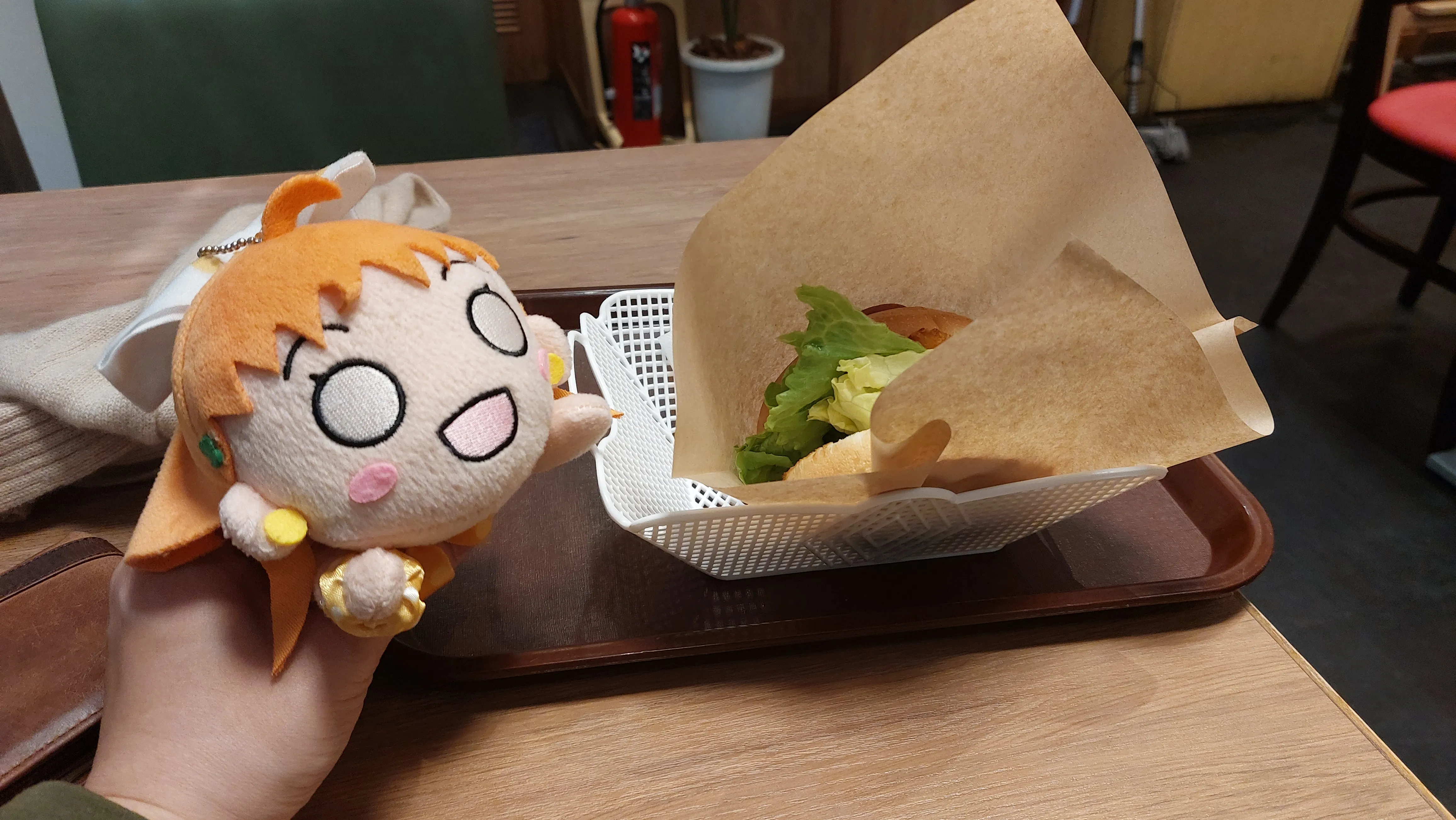
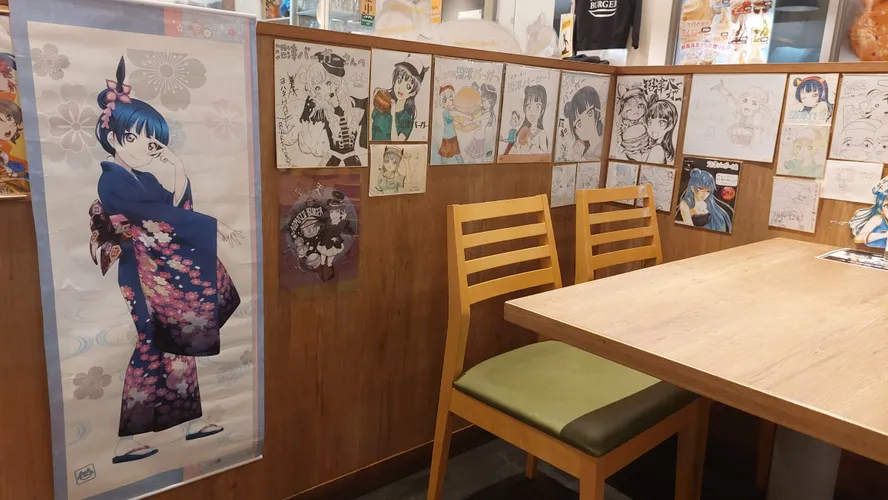
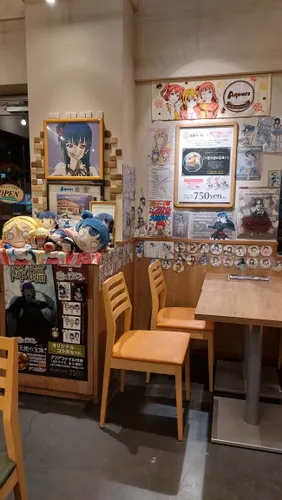
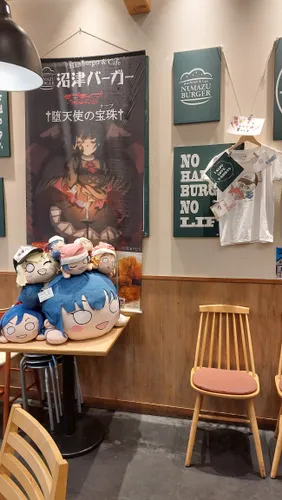
On the way back to my hotel, I stopped by a little quaint cafe called カフェブラン Cafe Blanc (Yes, I drank coffee at night time). If I remember correctly, they were already going to close, so I sat there and drank my coffee for a time before leaving after 30 minutes or so. I wasn’t a fan of coffee but soomehow the vibes let me appreciate that drink a little more.
This night would mark the end of my two days in Numazu. I originally planned to stay for three days, but decided against it due to some recommendations I got online. Not that it was a problem though, I’ve seen made many more trips back to Numazu since this first one.
Day 3 (Wednesday)
The start of a new day. Today, I was going to Lake Kawaguchiko, one of the Fuji Five Lakes. I’ve wanted to see the five lakes for a long time thanks to Yuru Camp, so I was very excited for this part of my trip.
But, of course, no exciting goes without some SNAFU. I originally booked a 10:00AM ride on the Mishima/Kawaguchiko Liner Express Bus from Mishima. My plan was to wake up at about 7:30AM, check out by 8:30AM, get some breakfast then get to Mishima station in time for the bus. I was really tired from the day before, so I figured that if I wake up late, I could just cancel my reservation and get a later bus. On this day, I did indeed wake up late.
“No problem”, I thought. I went online and cancelled my reservation. I had also seen that the next bus would only come at around 2:00PM, so I checked out at 11:00AM and slowly head over to Mishima station. I had lunch at a sushi restaurant called Numazu Uogashizushi near the station. I couldn’t go far though, the lockers were completely filled so I couldn’t put my luggage there.
Using some of the extra time, I also finally exchanged my JR Pass here. The plan was for it to be valid from December 31st to January 6th.
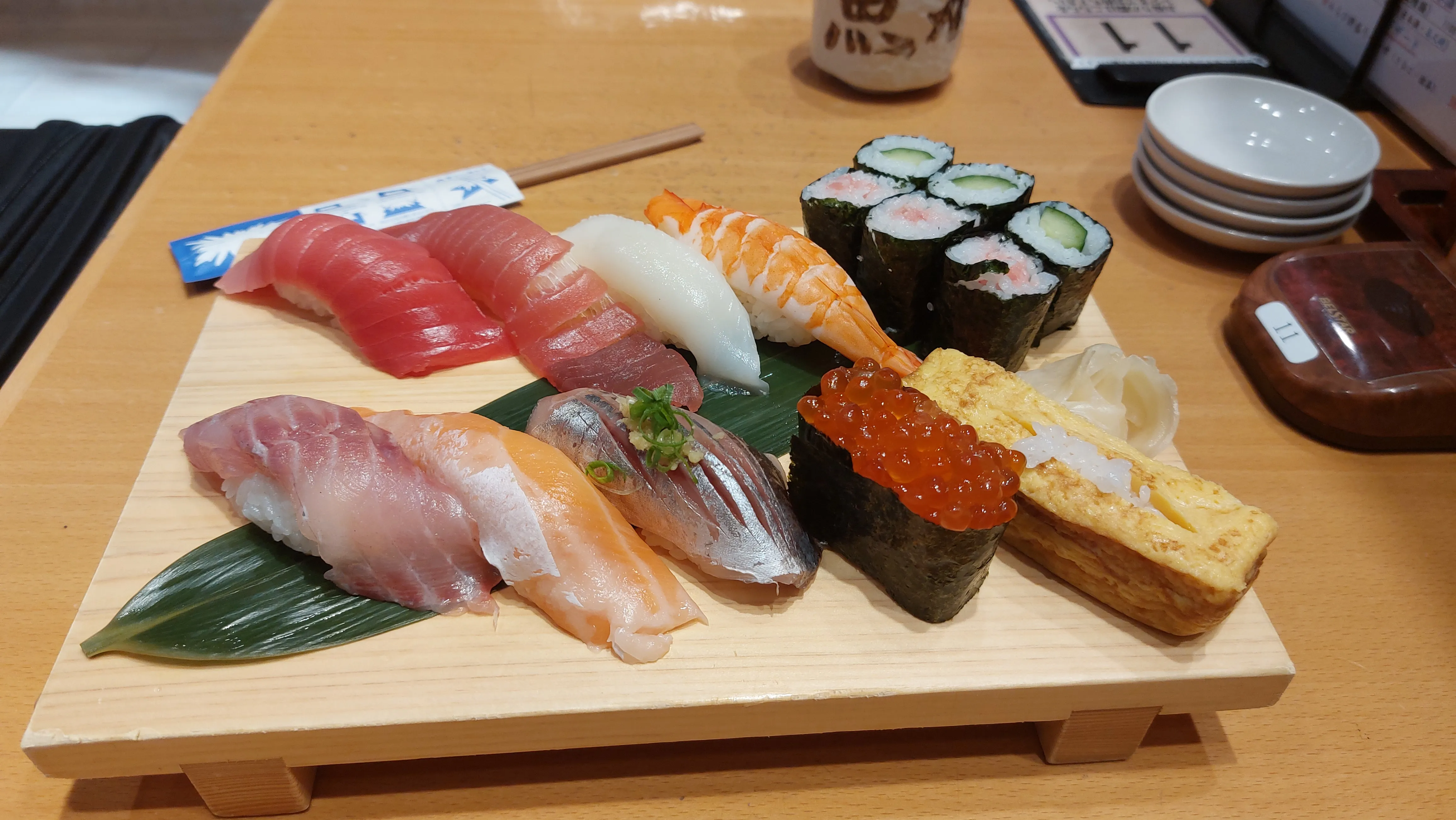
It was then, two hours later, that disaster struck. It was by my own hand, of course. I checked online and realised that I needed to have a reservation in order to use the Express bus because that are only reserved seats on the bus. To make matters even worse, you had to reserve the bus the day before your planned trip. Which meant… I could not take the bus on that day.
Oh, no.
Well, there’s really only one way going forward: I had to take the long way around. In summary, my expected transit was
- Numazu to Mishima via the Tokaido Line
- Mishima to Kawaguchiko via the Limited Express Mishima-Kawaguchiko Liner
My transit ended up being
- Numazu to Mishima via the Tokaido Line
- Mishima to Shin-Yokohama via the Tokaido Shinkansen
- Shin-Yokohama to Hachioji via the Yokohama Line
- Hachioji to Otsuki via the Kaiji Limited Express
- Otsuki to Kawaguchiko via the Fujikyuko Line
You will have noticed that there are WAY more connections than my original transit, which is to be expected. Instead of a direct ride from Mishima station to Kawaguchiko station, I was instead taking a big round back to Yokohama, heading northwest to the end of the Chuo Line just to use the only train line that goes to Kawaguchiko station.
I also ended up getting off at the wrong station when trying to get to Hachioji station on the Yokohama Line, so my transit was delayed even more than it already was as I needed to wait 15 minutes for the next train.
My total cost of traveling went from ~$20 (which I lost because I missed the bus) to ~$80, and instead of arriving at Kawaguchiko station at the planned 11:30AM, I ended up reaching in the evening at 6:00PM. In a rural place like Kawaguchiko, that means I was basically unable to do anything when I arrived except have dinner.
In true Japan fashion, I ended up getting off at the wrong step when trying to get to Hachioji station on the Yokohama Line, so my transit was delayed even more than it already was. The cost of transit went from ~$20 (which I lost because I missed the bus) to ~$$80, and instead of arriving at Kawaguchiko at the planned 11:30AM, I ended up reaching in the evening at 6:00PM. As much as I like trains, it was unfortunate to have wasted an entire day on the train.
On a side note, I stumbled upon this train on the Fujikyuko Line. Hololive was having a collab with Fuji-Q Highlands (which I did not end up visiting).
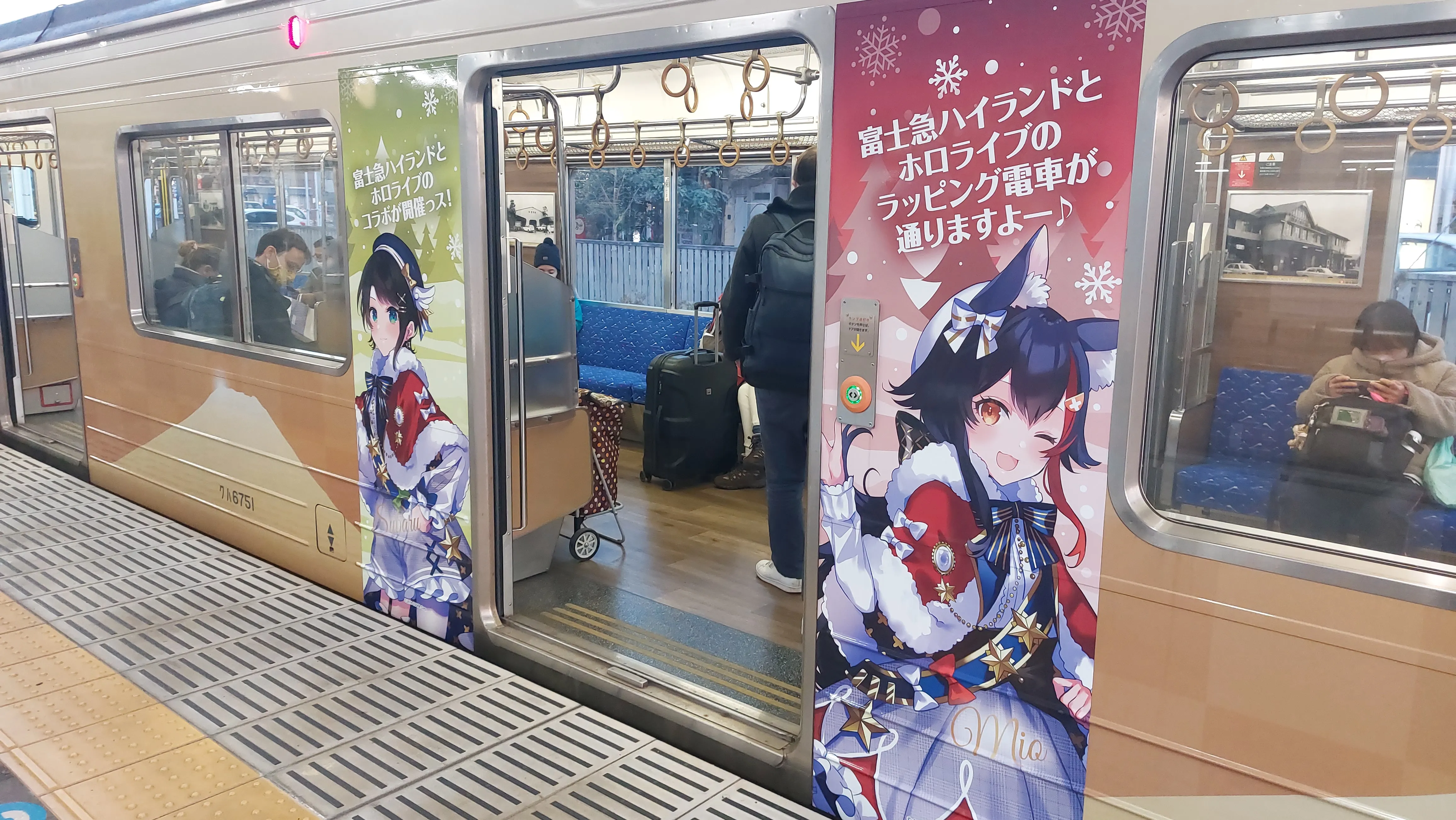
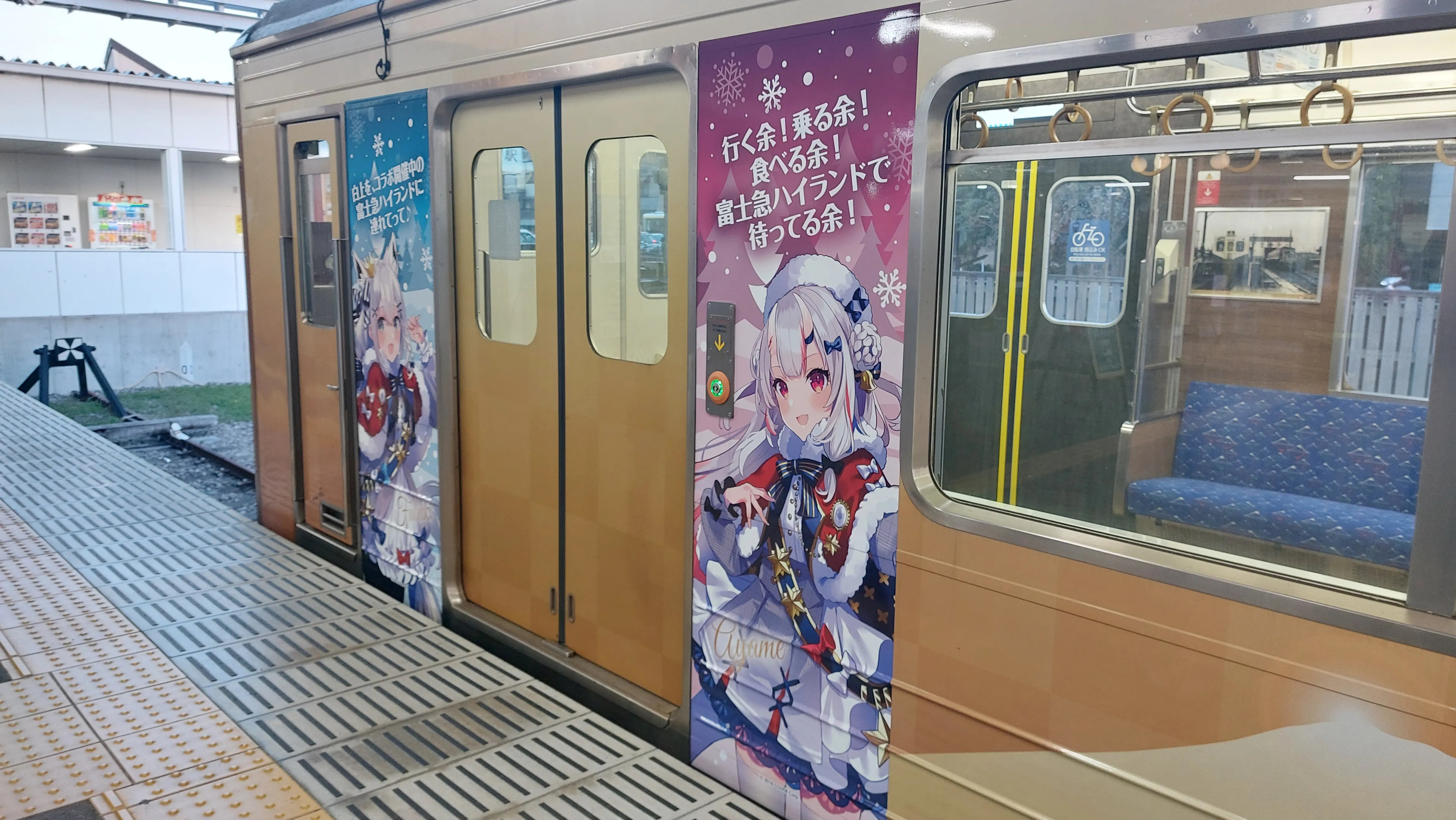
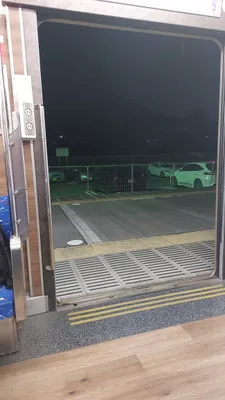
As mentioned before, there wasn’t much to do after checking into my hotel. I originally planned to cycle around the lake today, but I would have to put it aside for now.
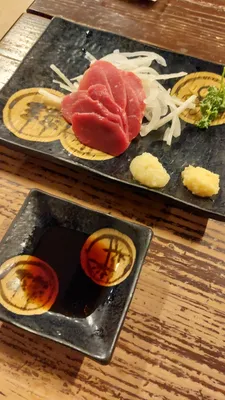
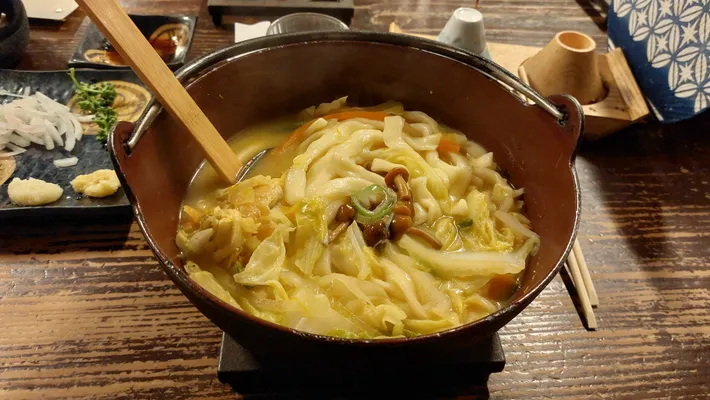
I went out to have dinner. I wanted to try some okonomiyaki, but the restaurant I walked to was fully booked. Seems like they only take reservations, or maybe they just didn’t want a stinky foreigner inside. I wanted to try out a “Japanese Restaurant” (or so it was called on Google Maps), but it was also fully booked. I ended up eating at Hotou Fudo Kawaguchiko Station ほうとう不動 河口湖駅前店. I ate some houtou which is a local speciality of Yamanashi, and some horse meat sashimi. The houtou was very nice, as I am a fan of noodle soups particularly in the winter time. The horse sashimi (basashi) was alright, it’s too game-y for my tastes. That basashi, and every basashi I’ve eaten since tastes like they left it in the freezer for too long, and didn’t thaw it before serving.
Hotel Review: Plaza Inn Kawaguchiko
I went from a semi-rural hotel, to a very rural hotel. Some notes:
- The location is excellent, literally just in front of the station
- The room isn’t very spacious, which I expected. I was able to move some furniture around and open my fairly large ~140cm dimensions luggage though.
- The bed was a single bed. I don’t remember it being particularly comfortable.
- Air-conditioner is a standard wall unit and can be controlled with a remote. I didn’t use it though as I didn’t really need to heat the room. I instead opened a window to let a bit of cool air enter the room and it was plenty when underneath the covers.
- The bathroom was the usual TOTO prefabricated bathroom unit. The water came as a separate hot/cold tap which makes getting the correct water temperature and pressure difficult.
- Shampoo was provided, but came in a single satchet that was replaced every day. Presumably, you can ask for more at the front-desk (but not before 11PM, as will be made apparent later). Body and hand soap were combined as a physical bar of soap. I was fine with it back then, but I can’t say that I would accept this arrangement now. In the worst-case scenario, I guess you could just bring your own soap or buy some from the nearby konbini.
- The room key is an actual physical key that you had to leave at the front-desk every morning. The front-desk closes at about 11:00PM every night, and reopens at 7:00AM. I’m not sure what happens if they realise someone hasn’t come back yet at closing time, but I definitely won’t be the one testing that lol! That said, most things around Kawaguchiko close at 7-8PM, so you would have no need to be out past like 9PM anyway.
- There are other amenities, like a Karaoke room, but I didn’t try out any of them.
- The place was stupid cheap, it was 5,000JPY a night on Agoda. Nowadays it’s way more expensive though.
All in all, I thought it was alright. It was perfectly serviceable for a young, solo traveller. The owners gave me a Mt. Fuji post card on check-out day which was nice.
Day 4 (Thursday)
I start off the Thursday on a terrible note. Before I came to Japan, I ate some chicken rice (a local Singaporean dish) with my family on the Sunday the week before I flew. Today, all of us ended up contracting some kind of mild food poisoning, likely from undercooked chicken. I had some charcoal pills with me so I took it regularly, but I had to plan my entire walking route for the next few days to make sure I was near a public toilet everywhere I went. Fortunately, Japanese people tend to treat public spaces with care so any given public toilet has at least a 90% chance to not be completely disgusting when I walk inside.
I woke up pretty early, around 7:30AM and left the hotel at 8:30AM. I had breakfast at this place called HAOSTAY Coffee, which had a pretty nice atmosphere. I ordered some sandwiches and a hot coffee to start the day. There were a mix of locals, local tourists, and foreign tourists coming into the cafe.
To be continued…
Footnotes
-
The fastest I’ve ever been out of a Tokyo airport was arriving early in Narita Airport with no checked bags was 12 minutes and 40 seconds. I timed myself from the moment I deplaned to exiting the customs door. ↩